
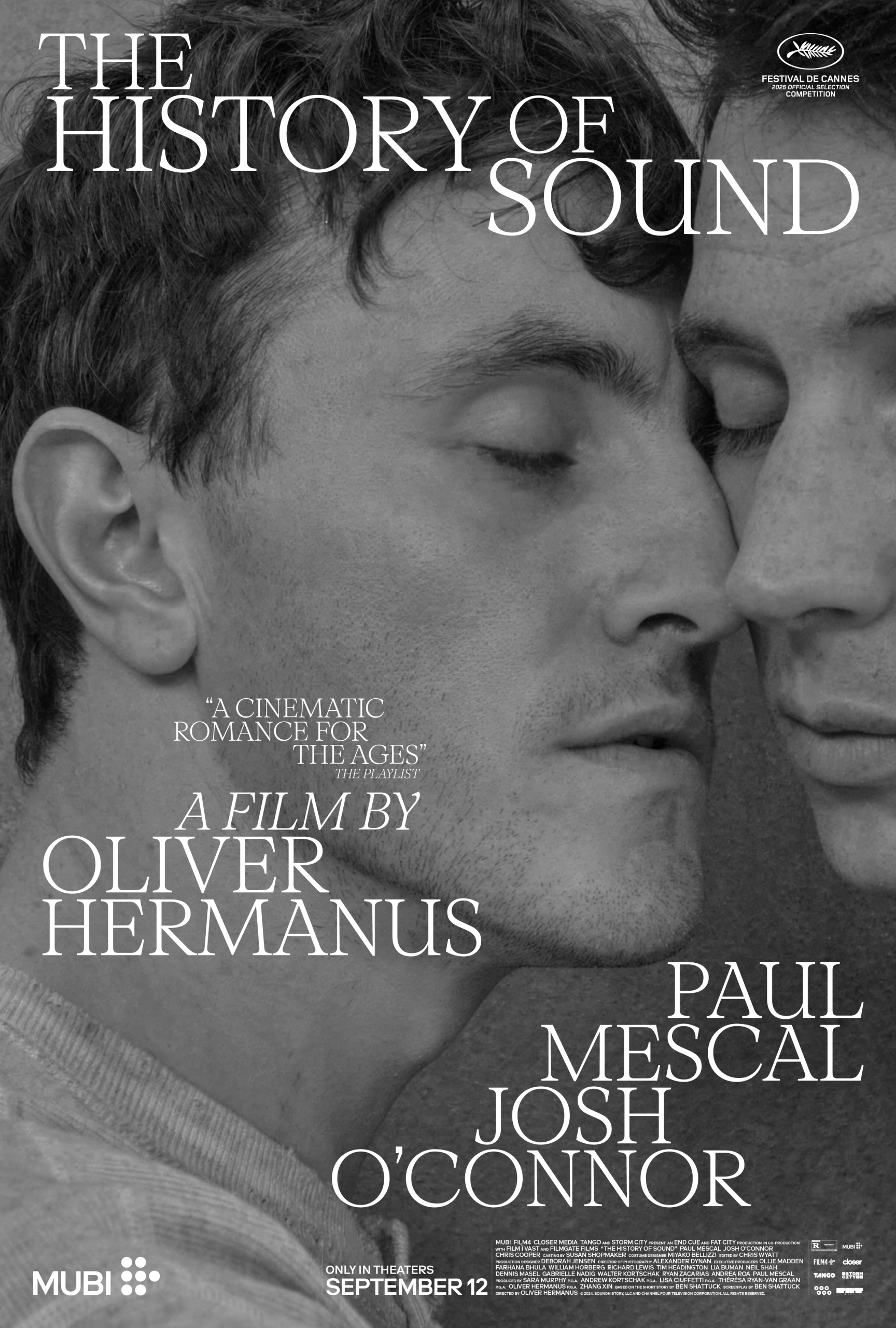
The History of Sound is one of those films that asks for patience before it reveals its full power. Rather than chasing big declarations or obvious melodrama, it moves with a soft, reflective rhythm and lets music carry much of the feeling. The result is a period romance that feels intimate, melancholy, and genuinely haunting.
Set in the early twentieth century, the story follows Lionel, a gifted young man whose connection to music opens a path beyond the life he was expected to live. At school he meets David, and what begins as attraction slowly deepens into an intense but fragile bond. Their relationship unfolds through stolen time, folk songs, and the emotional pressure of a world that has little room for love like theirs.
What makes the film stand out is its control. It understands that longing can be more revealing than confession, and that silence can sometimes say more than dialogue. The romance is not built around flashy twists. Instead, it grows through atmosphere, glances, absence, and the way memory keeps reshaping what love meant in the first place.
The performances do a great deal of the heavy lifting. Lionel is played with a quiet inwardness that suits the film’s restrained style, while David brings a more restless, unpredictable energy. Together they create a chemistry that feels thoughtful rather than overstated, which helps the emotional ache linger long after individual scenes end.
This is also a visually elegant film. The period detail, the landscapes, and especially the musical passages give it a lyrical quality that can feel almost dreamlike. At times, the pacing borders on overly delicate, and some viewers will wish the emotional relationship had been pushed a little further into the open. Still, the film’s reserve is part of its identity, not merely a weakness.
In the end, The History of Sound works as a tender and mournful gay romance about what survives after love can no longer continue in ordinary time. It is less about narrative urgency than emotional afterglow, and for the right audience that makes it deeply affecting.
Rating: 7.5/10


