A review of Jack Sholder's film Freddy's Revenge, which stands out for its aesthetic and queer subtext.
Freddy's Revenge: a horror sequel that has become a cult classic for its queer atmosphere
This film deserves to be rediscovered, especially by horror fans seeking a queer atmosphere. A sequel to A Nightmare on Elm Street, Freddy's Revenge follows a new family as they move into the cursed house where Freddy Krueger had previously given poor Nancy Thompson nightmares before turning her life into a bloodbath. We meet the Walsh family, and particularly Jesse (Mark Patton), a rather charming blond teenager who will become Freddy's new prey. Once again, Freddy uses dreams, transformed into violent nightmares, to instil fear and terror and wreak havoc. But this time, he wants to go further and possess Jesse in order to kill through him.
A pop eighties aesthetic and omnipresent homoeroticism
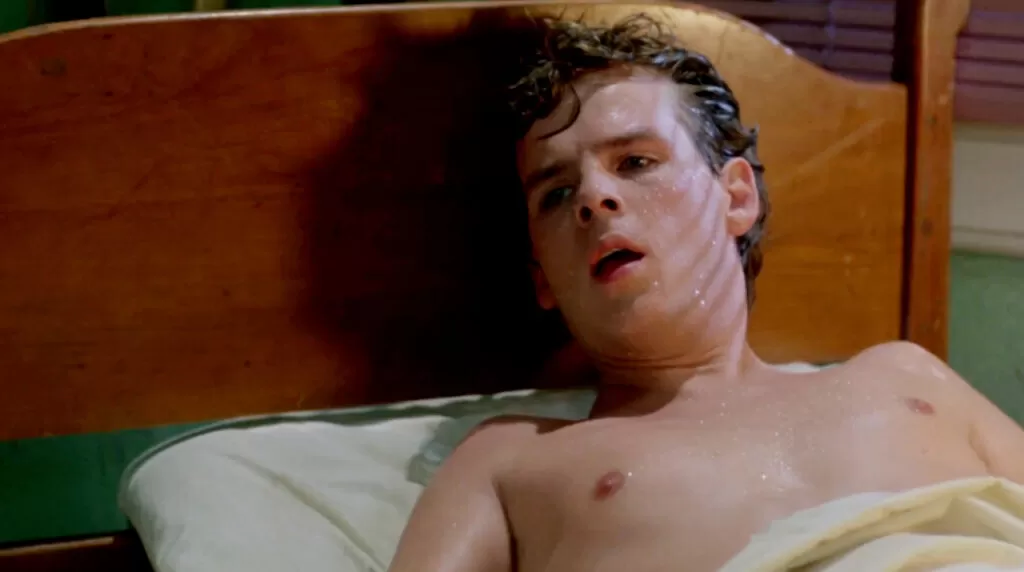
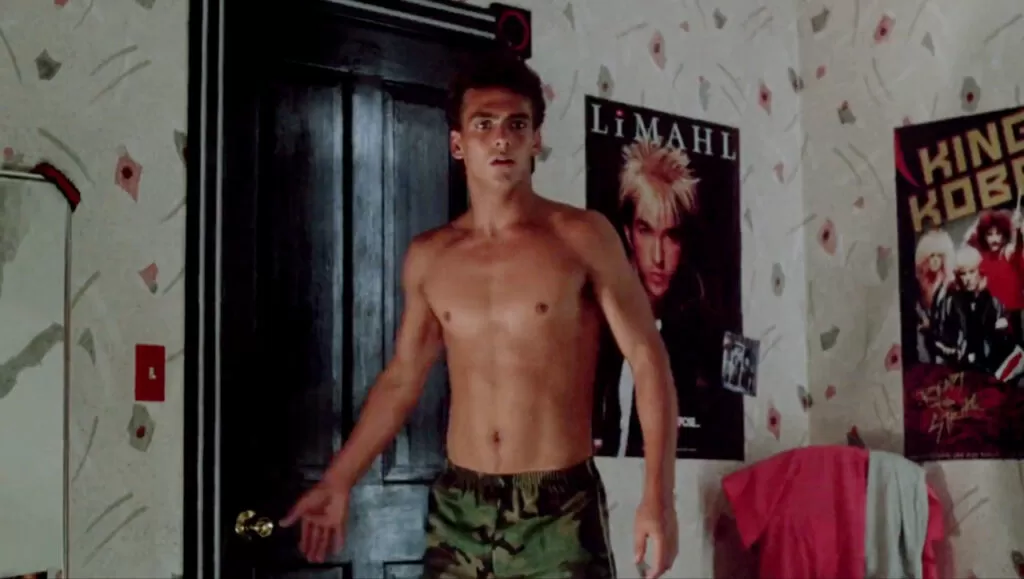
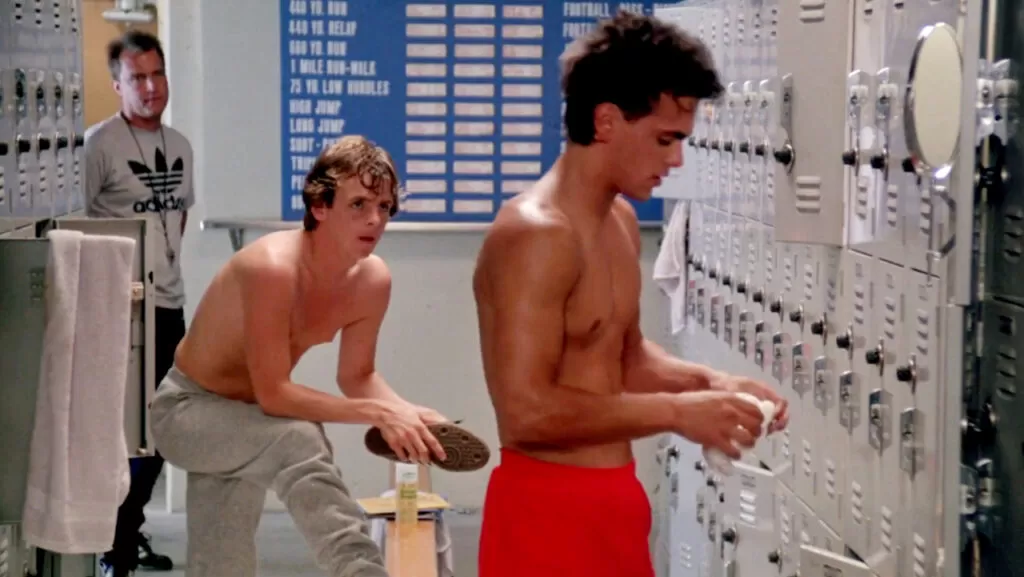
We once again find the framework and mechanics of the first instalment: fear and incomprehension, people around the main character who doubt him and may think he is crazy, and nightmares that blend ever more disturbingly with reality. What distinguishes this sequel, first of all, is its use of colour: very eighties, almost flashy. It has a very pop, almost candy-like quality that may clash with what we are usually accustomed to seeing. Beyond its colourful aspect, there is also striking, recurring homoerotic imagery that is very amusing. Jesse, the main character, wakes up drenched in sweat and shirtless in his bed. His musical tastes and the posters in his room would not be out of place for a gay teenager. When he fights with a fellow student in gym class, we discover that he wears jockstraps. One of his nightmares features his sports coach as a leather daddy, whose fate resembles a very intense BDSM punishment. His best friend is filmed with tender sensuality. Homoeroticism seeps in everywhere, making the whole thing extremely fun and likeable.
The queer subtext of Freddy's Revenge and the metaphors of the AIDS years
While the primary appeal of this new instalment is its queer horror aspect, which one would not expect from a film from the 1980s, its nasty, sadistic and rather playful attacks also deserve praise. Above all, a deeper analysis reveals interesting metaphors about repressed homosexuality and the fear of AIDS, which was sadly rampant at the time.
Film produced in 1985. Available on VOD.
Other horror films with a queer aesthetic
- Brain Damage
- Nevrland
- In the Mouth of the Wolf


Comments