
Preserving a lover’s happiness by killing him is the idea this film asks us to contemplate, and it is where I find myself unable to follow its reasoning. Yves sees the murder of Claude as a way of protecting him from future suffering, fixing him forever at the happiest instant of his life. I can understand that the film wants us to wrestle with that explanation. But presenting what amounts to cold-blooded murder as an act of selflessness is a proposition I simply cannot accept.
That disturbing motive sits at the heart of a bleak psychological drama from the darker reaches of gay cinema. The material has real possibilities: a street hustler, his dead lover, and a confession that has to explain a killing as brutal as it is bewildering. Yet the film’s reliance on conversation places enormous demands on both its writing and its central performance. For me, neither the exchanges with the police nor the man at their centre makes that burden compelling enough.
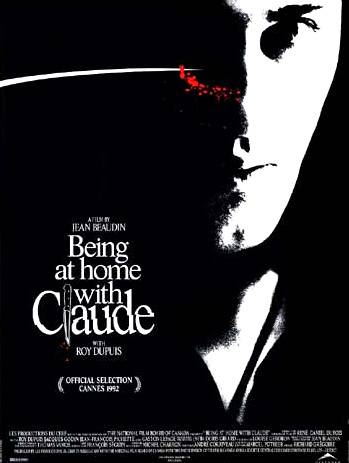
Long before that confession, Claude had paid Yves for sex. Claude was a university student from Quebec, with a girlfriend and an ostensibly straight identity. What began as a transaction years earlier developed into love, and the relationship became intensely meaningful to both men. On the night Claude died, their consensual lovemaking brought them to a moment of complete physical and emotional harmony.
For Yves, that happiness also raised the prospect of everything Claude would eventually face. He imagined his lover having to acknowledge being gay in a world ready to condemn and reject him. The thought of Claude enduring such pain was unbearable to him. At the peak of their pleasure, Yves killed him, believing he could hold Claude in that perfect state permanently. In his own understanding of the act, he was preserving happiness and preventing any later experience of shame or hurt.
The film begins after the killing, with three days passing before Yves contacts the police to surrender. Even his choice of setting complicates the confession. He brings the police and the local press to a judge’s private chambers, to which he has keys—a detail that seems plausible enough given his occupation. With reporters waiting immediately outside, however, the arrangement looks like an elaborate attempt to blackmail the judge. The question driving the story is ultimately less about who killed Claude than why Yves did it.
Black-and-white flashbacks effectively piece together the circumstances, but the dialogue remains the film’s main concern. Too often, the flat execution left me feeling as though I were watching a stage production recorded on camera. Yves’s arguments and quarrels with the cops failed to sustain my attention, and I never found a connection with him. Whether the problem lies in the pacing or something in the performance, the lead does not quite convey the passion, emotional force and weight the part requires.
I do not expect a film like this to leave me cheerful. Its purpose is to provoke reflection and conversation, and there is certainly an idea here worth exploring. A modern retelling with greater finesse, stronger tension and a proper budget could give that premise another chance. This version, though, left me largely unmoved despite the potential buried within it. 3/10