
On sera heureux: two gay immigrants at the heart of Léa Pool’s gripping thriller
On sera heureux (We’ll Find Happiness): love and the struggle to stay in Canada
Three superb performances give Léa Pool’s On sera heureux its human force. Mehdi Meskar, Aron Archer and Alexandre Landry play men whose tenderness and failings emerge through a story of love, concealment and betrayal. The film’s construction may be conventional, but its hold on the viewer is formidable: this is an exceptionally effective thriller, gripping throughout, with no slack moments.
Two lovers seeking an ordinary life
For Saad (Mehdi Meskar) and Reza (Aron Archer), the ambition is simple: to live normally together and, eventually, secure the right to remain permanently in Canada. Saad comes from Morocco; Reza comes from Iran. They met and fell in love while escaping their respective countries on their way to Canada.
What they have fled, however, continues to threaten their future. Reza’s former partner was hanged in Iran because he was gay. As Reza faces being sent back there, that history makes his fear all the more immediate. Saad has another vulnerability: to enter Canada while hiding a past mistake, he took measures to conceal his fingerprints. That concealment cannot protect him forever.

When an appeal for help becomes a secret relationship
Before resorting to deception, the couple turn to the authorities and try to make their case. An overloaded system gives them scant attention. As the prospect of deportation becomes harder to escape, Saad stakes everything on someone with influence: Laurent Gauthier (Alexandre Landry), a man whose high-ranking position could make him useful.
Saad’s work as a driver gives him an opening. During a ride, he flirts with Laurent, approaching him discreetly and finding that his advances are welcome. An affair begins and develops into a relationship. Reza knows nothing about it: he is sheltering in a church while the authorities search for him in order to deport him.

The danger is no longer confined to Reza’s impending removal. Laurent has fallen in love, and Saad is becoming attached to him. The need to save Reza and the moral consequences of Saad’s actions create two mounting pressures, each threatening to erupt.
What the three men bring to the drama
Pool builds a love triangle whose existence remains hidden within the political thriller. Its characters are beautifully written and immediately engaging, drawn unwillingly into an increasingly nightmarish succession of lies and betrayals. None is reduced to a single quality: each of the three men exposes both his humanity and his shortcomings.
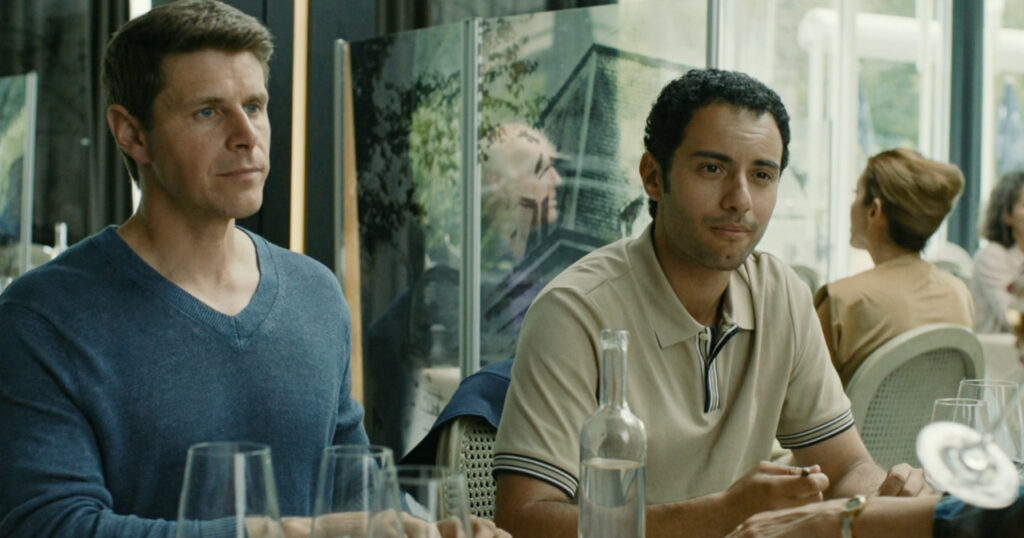
Meskar makes Saad convincing as a lover prepared to do anything to save the man he loves. Archer gives Reza the purity of someone whom fate persecutes without respite. Landry, meanwhile, portrays a privileged man whose awakening takes him as far as self-sacrifice. The nuances in these three remarkable performances give the screenplay’s emotional conflicts their full weight.
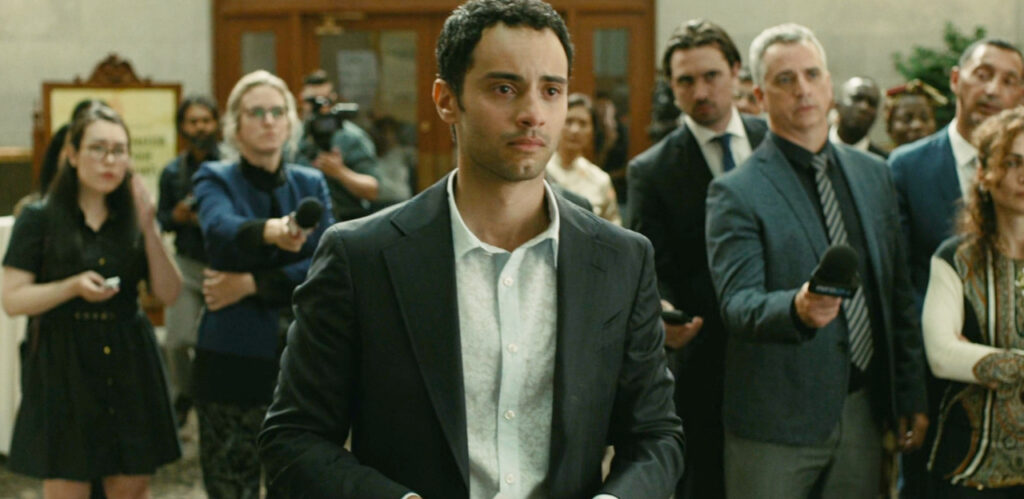
A political system measured against urgent human need
The writing also makes class dynamics quietly visible. Through the forces surrounding these men, it exposes both the deficiencies and the tragedy of a system unable to help people in desperate, immediate need. Political machinery places greater value on its public image than on humanity, with the potential to leave lives tragically broken.
Handled with sensitivity, assurance and energy, this politically committed fiction conveys the daily harshness experienced by LGBTQ+ people who leave their countries simply to seek an ordinary life elsewhere. Immigration in the present day offers them no easy path. The film’s insight and realism make that struggle a powerful testimony, while the intimate cost of navigating it gives the thriller its enduring force.

Produced in 2026, On sera heureux was presented at the 2026 Chéries Chéris LGBT Film Festival.