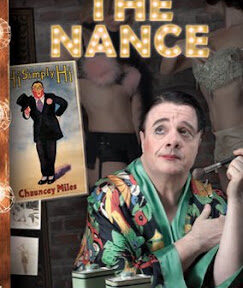
By the time The Nance reaches its final image, Chauncey Miles is almost entirely alone. The theater around him is closing, the ceiling begins to give way, and he remains beneath a damaged spotlight, singing the number audiences know as his signature. It is an ending that captures the contradiction at the heart of the Lincoln Center Theater production: Chauncey can perform defiance in public, yet he remains unable to escape the self-hatred that governs his private life. That role is played by Nathan Lane, who carries the filmed production as a Depression-era comedian specializing in burlesque's “nance” character. Lane is outstanding, and his performance gives Chauncey both comic authority and painful vulnerability. Still, watching a stage production from a couch is not the same experience as seeing it in person, particularly when the running time approaches two and a half hours. My reaction to The Nance is therefore a personal one, and other viewers may respond to its rhythm and structure very differently. A performer trapped inside the joke The story takes place in 1930s New York City, when homosexuality was not merely condemned socially but treated as a crime. Burlesque theaters offered inexpensive, disreputable entertainment built around women dancing in revealing costumes and a steady supply of crude adult humor. Among the familiar figures was the nance, a caricature of a gay man. The joke depended on an uncomfortable fact: the part was generally played by a straight actor. Chauncey Miles breaks that pattern. He performs the nance onstage, but he is gay offstage as well. His life…
