
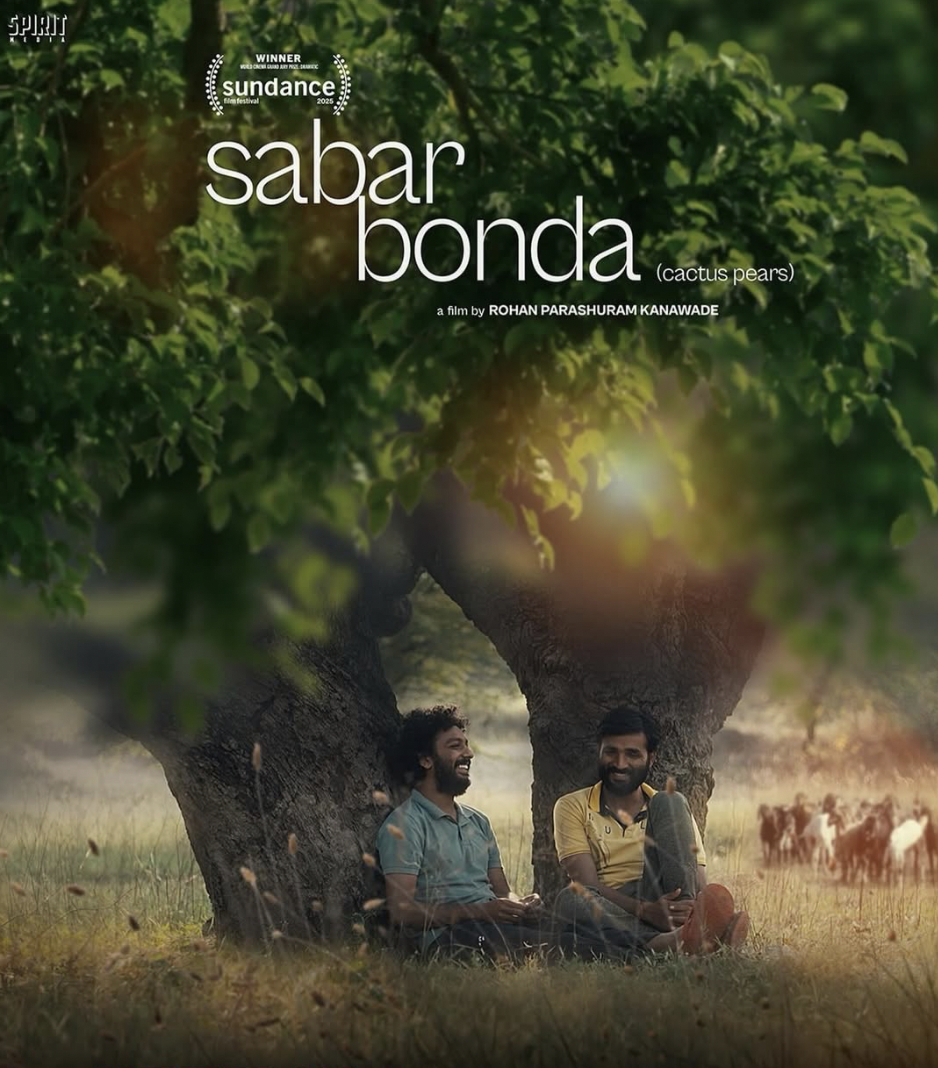
Sabar Bonda is not a film that tries to win viewers with twists, spectacle, or loud emotional breakdowns. Its strength lies in how quietly it observes grief, loneliness, and the hesitant possibility of connection. Set in a rural Indian village and told with remarkable patience, it becomes a tender queer drama about two men circling each other while life, custom, and loss hang heavily in the air.
The story follows Anand, who returns from Mumbai to his ancestral village after his father dies. He arrives not just to mourn, but to move through the exhausting rituals that follow death, all while enduring the social pressure that quickly falls on an unmarried man of his age. In the middle of this emotionally suspended period, he reconnects with Balya, a childhood companion whose own life has been shaped by class difference, limited options, and the expectation that he should eventually settle into a conventional future.
What makes the film work so well is that it never pushes their relationship into easy melodrama. Anand and Balya do not fall into a neat romantic fantasy. Instead, the film builds intimacy through small gestures, half-finished conversations, shared memories, and long stretches where both men seem unsure whether they are allowed to want more from life. That restraint gives the eventual emotional movement far more weight than a more demonstrative script could have managed.
The film is also sharply attentive to family, especially in its portrayal of Anand’s mother. She is practical, observant, and emotionally generous in a way that keeps the story grounded. Her presence adds warmth without turning the film sentimental, and she helps frame queerness not as an abstract social issue but as something lived inside ordinary domestic life, tradition, and compromise.
Visually and structurally, Sabar Bonda embraces slowness. That will divide audiences. Some viewers will find its rhythm meditative and immersive, while others may feel it takes too long to arrive at its emotional peaks. The film asks for patience, and it does not provide much conventional narrative urgency in return. But that unhurried approach is also what gives the drama its authenticity. It feels less like a plot being delivered and more like a fragile emotional space being opened up.
There is also a subtle richness in how the film handles caste, class, and rural masculinity without constantly underlining them. Balya’s social position matters. So does the difference between leaving and staying, between city life and village life, between secrecy as survival and secrecy as habit. None of this is reduced to slogans, which makes the social world of the film feel lived-in rather than programmatic.
In the end, Sabar Bonda is a deeply felt queer drama about mourning, memory, and the difficult sweetness of letting another person get close. It will not be for everyone, especially those who want a faster or more plot-driven romance, but for viewers willing to meet it on its own quiet terms, it offers something rare: emotional honesty without theatrical excess.
Rating: 8/10
/>


