
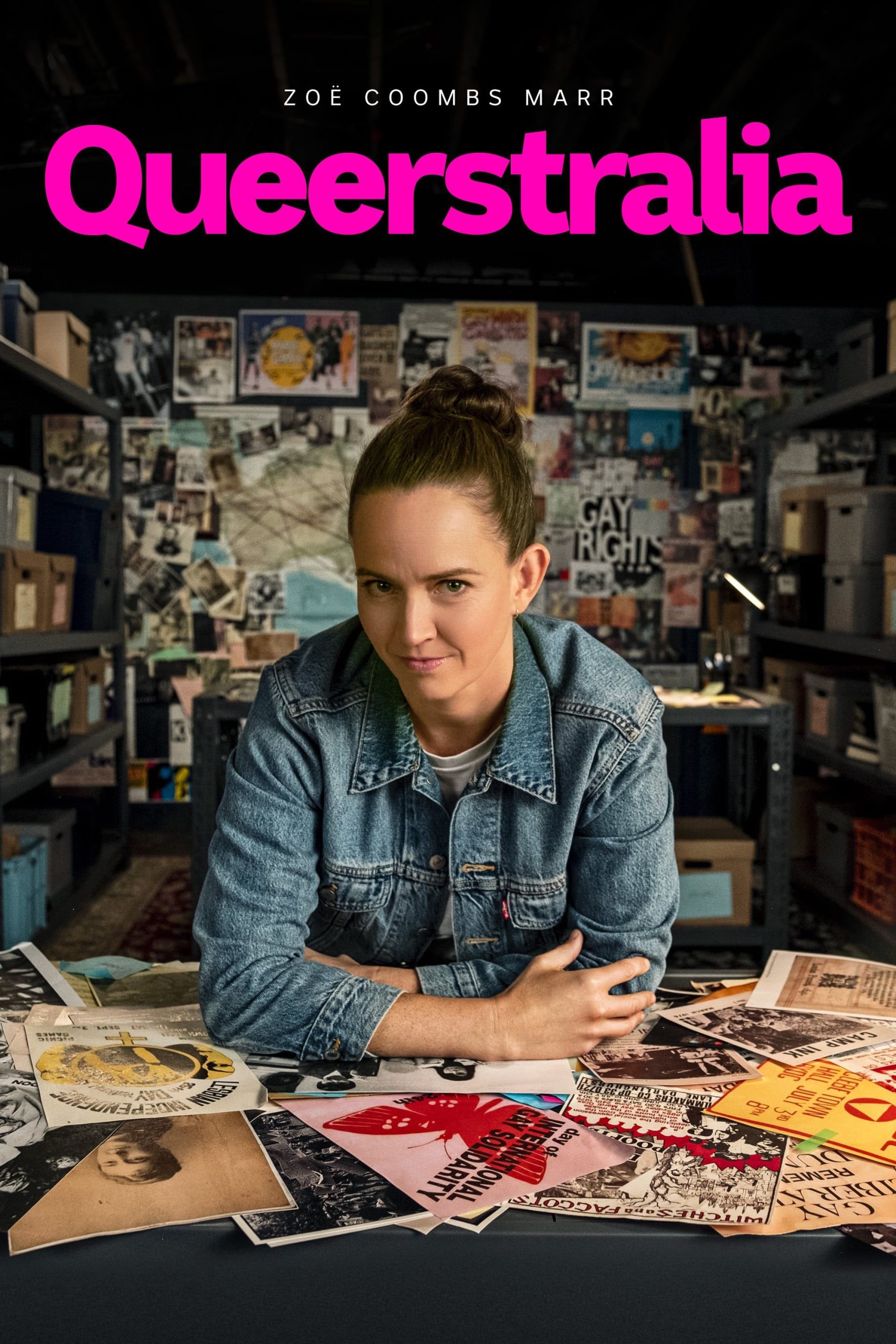
Queerstralia is the kind of documentary series that immediately stands out because it refuses to treat queer history like a museum display. Instead of delivering a dry academic lecture, it moves with humor, irreverence, and personality, using comedy as a way into a much larger story about how LGBTQIA+ lives have shaped Australia for generations.
Hosted by Zoe Coombs Marr, the three-part series explores an enormous sweep of history, from Australia’s colonial era to modern debates around identity, activism, marriage equality, and representation. Along the way, it touches on criminalization, drag culture, the first Mardi Gras activists, the AIDS crisis, trans pioneers, and the language different communities have used to define themselves. It is ambitious material, and the series deserves credit for refusing to shrink queer history into a neat, sanitized narrative.
What makes Queerstralia engaging is its tone. It is witty without feeling trivial, informal without becoming shallow, and politically aware without turning into a classroom exercise. Zoe’s comic voice gives the series energy, and that helps a lot when the subject matter becomes heavy. The show understands that queer history is not only made of oppression and trauma; it is also made of survival, absurdity, rebellion, performance, and cultural invention.
The series is especially effective when it connects the legal history of persecution with the lived textures of queer community life. It does not simply list milestones. It shows how language, public space, resistance, and identity evolve together. The inclusion of First Nations perspectives also gives the documentary a broader and more layered understanding of what queer history in Australia actually means, rather than pretending it can be told through a single mainstream lens.
At the same time, Queerstralia is working against the limits of its own format. Three hour-long episodes are not enough to fully unpack a subject this wide, and the series sometimes moves so quickly that certain names, events, and ideas pass by before they can leave a deeper emotional mark. In trying to cover so much ground, it occasionally sacrifices depth for momentum. Some viewers may also find that its humor and cultural references feel deeply local, which can make the experience slightly less immersive if you are watching from outside Australia.
Still, that local flavor is also one of the show’s strengths. Rather than flattening itself for an international audience, Queerstralia leans into the specificity of Australian queer culture, slang, politics, and memory. That gives it an identity many documentaries lack. Even when not every segment lands with equal force, the series remains lively and distinct, and it never feels embarrassed by the communities it wants to celebrate.
In the end, Queerstralia is not a definitive account of Australian LGBTQIA+ history, but it is an entertaining, smart, and often insightful entry point. It works best as a personality-driven documentary that opens doors rather than closes arguments. For Australian viewers, it is likely to feel especially resonant. For everyone else, it may not be uniformly gripping, but it still offers a valuable and often funny look at a queer past that deserves far more visibility than it usually gets.
Rating: 6.5/10


