
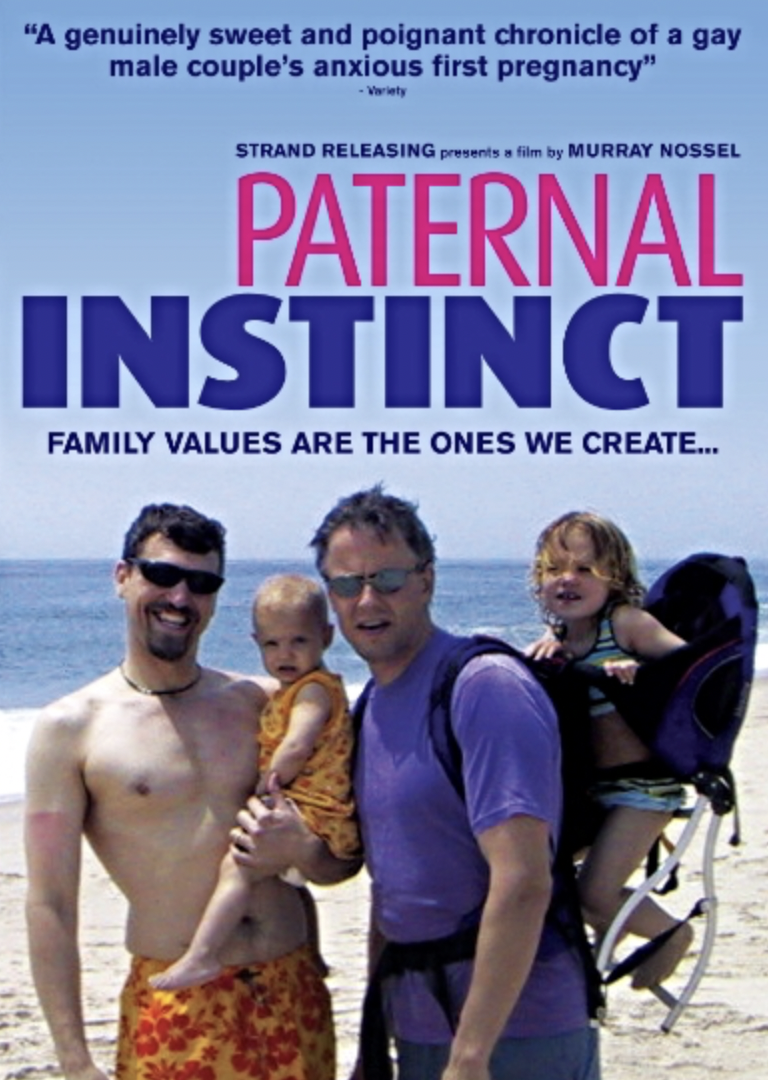
Paternal Instinct is less powerful as a polished documentary than as a time capsule. Seen today, its approach feels gentle, intimate, and undeniably dated, but that same dated quality also reveals how significant its subject once was in public conversation. At its core, it is a record of two men trying to build a family long before queer parenthood had become a familiar media topic.
The film follows Erik and Mark as they pursue fatherhood through surrogacy, documenting the emotional strain, hope, and uncertainty that shape the process. We see the search for a surrogate, the growing bond with the woman carrying their child, the disappointments that come before success, and the cautious joy that arrives when the pregnancy finally holds. Its structure is simple, but the human stakes are clear throughout.
One of the documentary’s strengths is its warmth. The interactions between the couple, the surrogate, and their wider families help create a reassuring portrait of support rather than conflict-driven spectacle. That matters, especially in a film dealing with queer family formation at a time when the subject was often framed through controversy instead of ordinary emotional reality.
At the same time, the documentary rarely digs as deep as it could. It tends to skim over the more complicated long-term questions around parenthood, surrogacy, and the evolving role of the surrogate after birth. The film often feels more interested in getting to the happy milestone than in examining the messier ethical and emotional terrain surrounding it.
Its homemade visual texture will divide viewers. At times, the film resembles an extended personal video diary more than a sharply shaped documentary feature. That intimacy can be endearing, but it also limits the sense of scope and critical depth. Modern audiences may find it earnest rather than especially revealing.
Still, there is value in the film’s sincerity. Paternal Instinct may not be analytically rigorous, but it does preserve something real: the emotional vulnerability of two men trying to enter parenthood in a world that still treated that dream as unusual. That alone gives it historical and cultural interest within queer documentary viewing.
In the end, this is a modest but heartfelt documentary whose importance lies more in its perspective than its filmmaking. It is not essential because it is formally outstanding; it is worth watching because it captures a meaningful chapter of queer family history with honesty and affection.
Rating: 5.5/10
/>


