U.S. AIDS Conference USCHA 2025 featured a thought-provoking workshop, led by Long COVID Justice 's Gabriel San Emeterio. He focused on the intersection of "Disability Justice" and HIV care, reminding us: to turn justice from a slogan into a process, the key is not how well you say it, but how you do it. Gabriel's starting point is straightforward: centering those affected, especially the most impacted and most easily overlooked groups. Following the context of the "Denver Principles" and "Meaningful Involvement of People with HIV/AIDS, MIPA," he advocates that people living with HIV are not just service recipients, but collaborators in policy and service design. Therefore, the workshop first clarifies what "disability" is, how ableism operates, how double stigma stacks up, and then discusses the governance challenges brought by chronic viral infection; finally, it returns to "how to write principles into processes." In summary: learn a set of practical, portable, and immediately usable methods, so that "leaving no one behind" is no longer just a slogan on the wall, but a daily practice in documents, meetings, and services. Redrawing the boundaries of "disability" and "justice" Gabriel advocates redrawing the boundaries of "disability" and "justice": "disability" is not a personal defect, but the places where people get stuck in real environments. It may be visible or invisible; it may be long-term or fluctuate over time. The key is how society and systems amplify or buffer limitations. This also exposes "ableism": we often use the invisible yardstick of "can you work, do you look 'normal'" to measure value; this yardstick overlaps with racism, capitalism, and colonial…

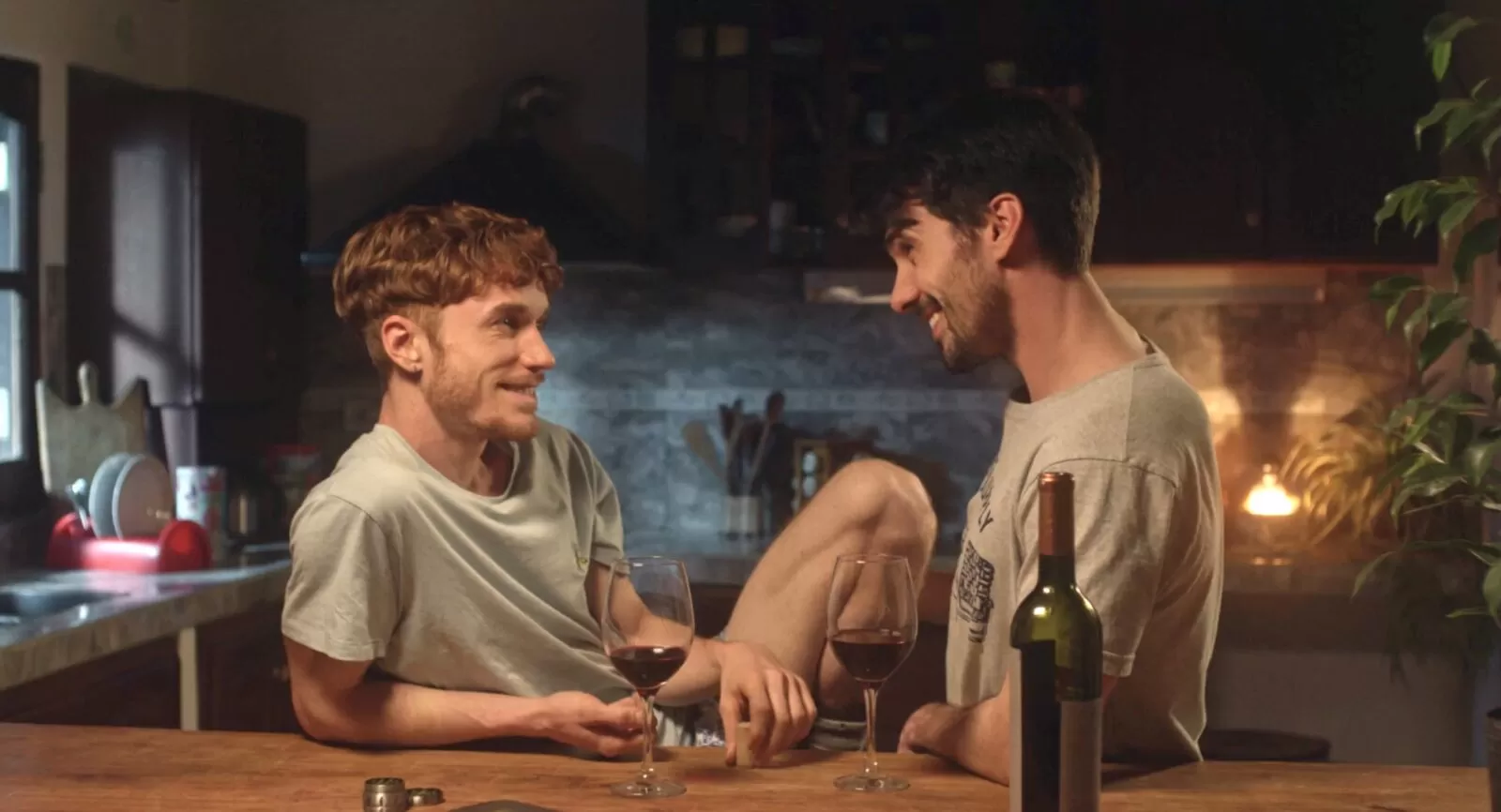
Critique of the film Quelques mots d’amour (Lo que escribimos juntos in VO / What we wrote together for the international title) – A film full of tenderness and sweetness about a gay couple newly settled in the countryside With Quelques mots d’amour, director Nicolás Teté (who directed Des secrets dans le placard) immerses us in the daily life of a loving gay couple who have left the city to try a more peaceful life in a house in the countryside. Summary of the film Quelques mots d’amour Argentina. Juan (Ezequiel Esteban Martinez) and Mariano (Santiago Magariños) have just moved into a house in the countryside. Far from the frenetic pace of the city, they enjoy the joys and calm of daily life in a rural environment. Space for themselves and for an adorable little dog, a garden, no noise. For Juan, who is a writer enjoying a bit of success, it is an opportunity to write while being well focused. And for Mariano, it is the opportunity to indulge his passion for plants and try to make a living from it. When one of their friends, Carla (Nazarena Rozas), comes to visit them for a few days, announcing both that she is pregnant and confessing that her couple life is not idyllic, she will, without realizing it, bring out some buried questions in this solid couple. A gentle and contemplative staging It is a somewhat special film that director Nicolás Teté delivers here. He avoids any major drama and plunges us into a kind of permanent calm. Like the two…
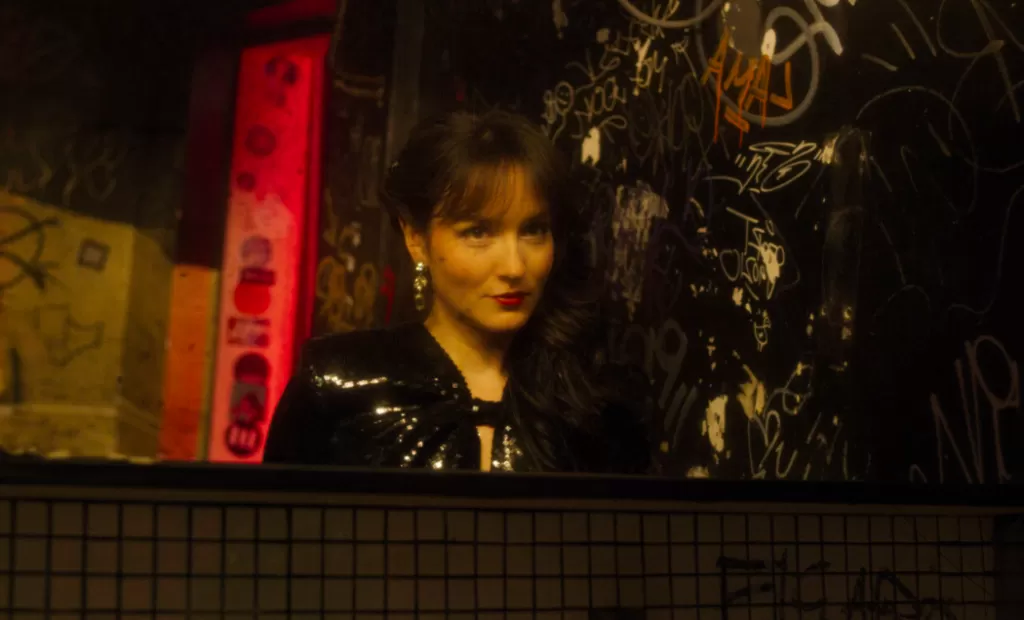
Free adaptation of the short story of the same name by Henry James, La bête dans la jungle is a new delightful OFNI signed Patric Chiha. Anaïs Demoustier and Tom Mercier are formidable in this atmospheric and highly romantic work. 1979. May (Anaïs Demoustier), in her twenties, is a night owl. She loves going to the capital's nightclubs with her trendy friends. As she goes to a new establishment that does not yet have a name, she recognizes John (Tom Mercier), a handsome boy who had deeply marked her ten years earlier. She was then just a teenager and, as one can guess, had fallen under his spell when he revealed to her an enigmatic secret: something, "the thing," would one day happen to her... John does not recognize May and does not really remember this meeting at first. Then the memory vaguely returns. No matter: May and John will become friends, night companions. Obviously, May is in love and hopes that her patience will be rewarded by following John in his bubble. But the mysterious romantic beau will remain unfathomable, asexual. For 25 years, from 1979 to 2004, they will wait for "the thing" to happen, meeting every Saturday night in the same nightclub. Will the long-awaited thing finally happen? Patric Chiha is here faithful to his obsessions and we find in La bête dans la jungle his taste and talent for creating unique atmospheres, plunging us into the heart of the night, of reverie, among moving bodies. This work is definitely divisive, does not and will…
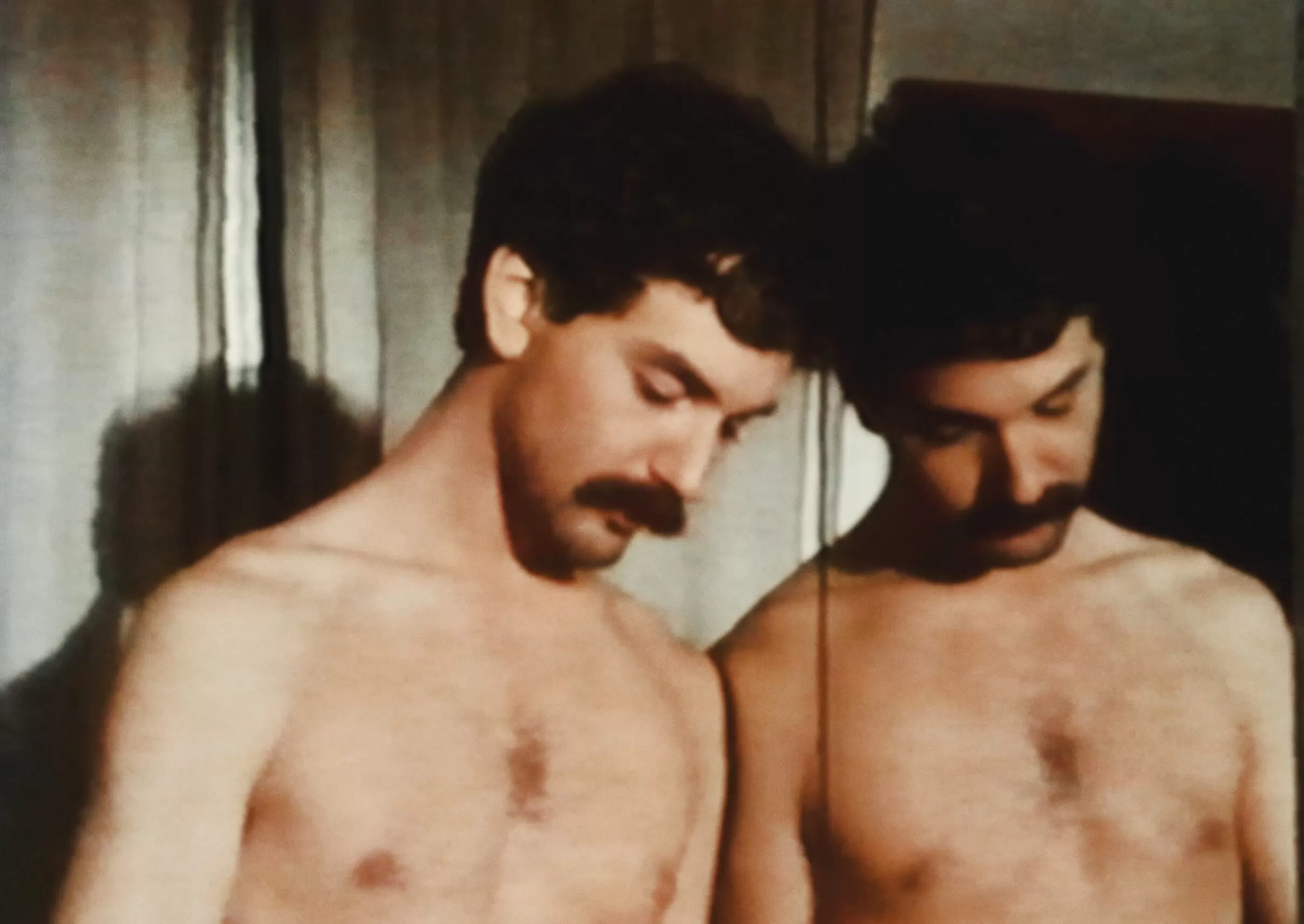
Gay film review 501 by Joe Gage Directed by Joe Gage under the pseudonym Tim Kincaid, 501 is a simple and endearing film that sublimates the handsome mustached Daniel Holt. Labyrinth of desire It is a pink film, meaning it is for adults. The story is both banal and universal: we follow a taxi driver (played by Daniel Holt) who appears to lead a solitary life. We see him wandering alone through several vignettes. We also understand that he is a man who fantasizes a lot, as very well suggested by the opening scene and a sequence where he devours with desire a gay magazine of the time (the mythical magazine Honcho). The encounter that changes everything To escape boredom, our handsome mustache enjoys himself alone or indulges in gay cruising… until, at a party, his gaze meets that of another handsome and virile mustached man played by the very sexy Richard West. The last part of the film is thus dedicated to this encounter that shows the symbiosis between the two men, their coup de coeur, suggesting that a beautiful story between two might begin. After a night of love, the wake-up time shows 5:01 AM, the film’s title is thus a nod to this moment when Daniel Holt’s character understands that he might no longer be alone. A sensitive and romantic vintage film Here we find the charm of vintage films, their unique atmosphere at a time when being an x-rated film did not prevent sensitivity and romance. It is a portrait full of love of Daniel Holt…
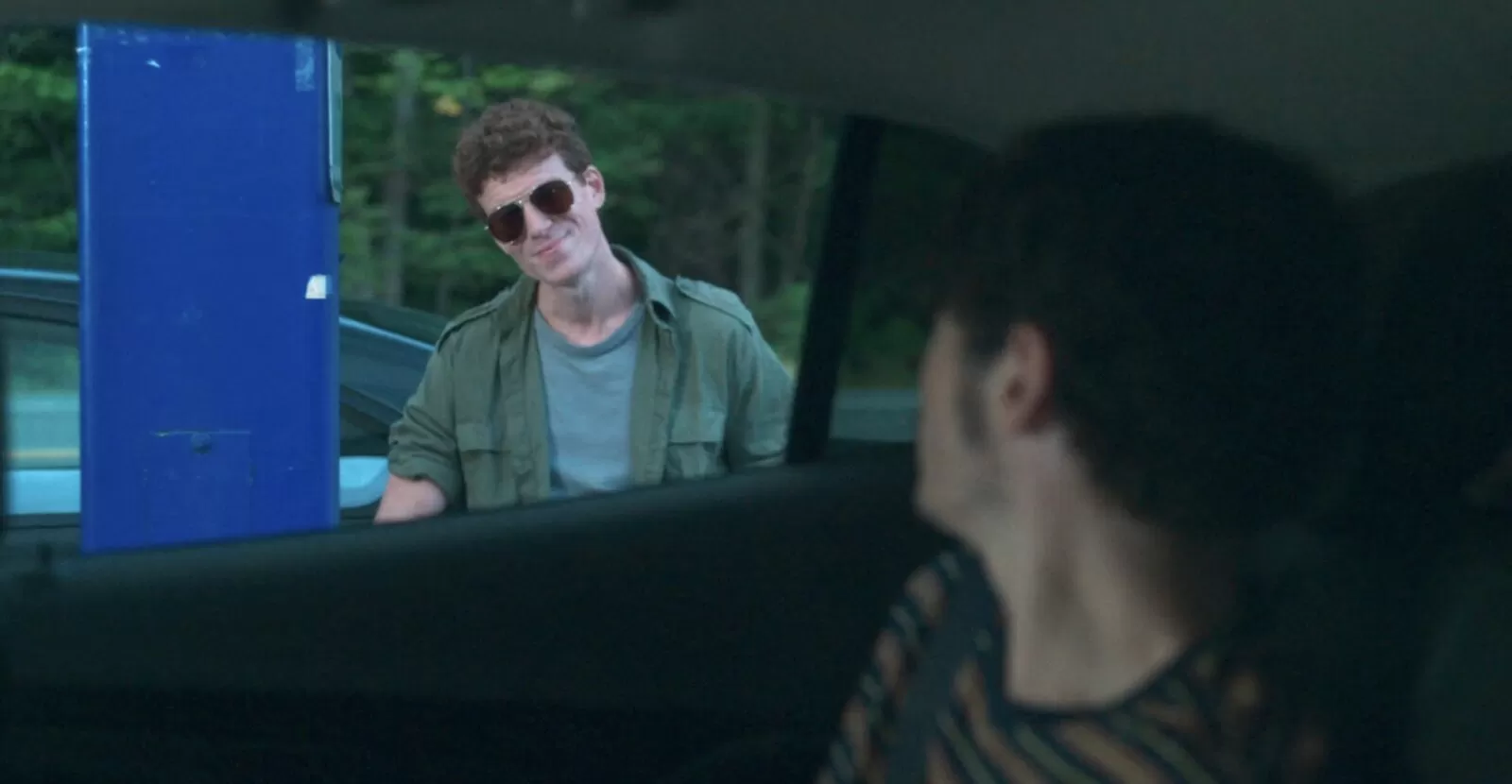
Critique of the gay thriller Autour du lac (Birder in the original version) Critique of the gay thriller Autour du lac (Birder in the original version) by Nate Dushku with the feverish Michael Emery. An independent film that evokes L’inconnu du lac. A dark and singular atmosphere It is a small film obviously made with few resources but which has a very dark and singular atmosphere that makes it leave its mark. Autour du lac is a bit like if L’inconnu du lac was filmed from the point of view of the killer. A potential serial killer The film does not make a mystery: from the start we understand that its main character, Kristian (Michael Emery), an ornithologist who will spend a few days in a naturist camp around an isolated lake in New Hampshire, is twisted. We will finally understand that he is a real potential serial killer and the deaths may accumulate at the camp where he will stay. Eroticism and danger Kristian has understood how to attract his gay prey into his nets: he has built himself a muscular body that he proudly displays, he masters cerebral domination, knows how to play verbally to tease those around him. And more than ever here the little death will be linked to the real death in disturbing scenes that mix furious and gently kinky eroticism and great danger. A singular gay thriller If gay cruising has already inspired the gay thriller genre several times and for once this film by Nate Dushku does not particularly shine by its formal…
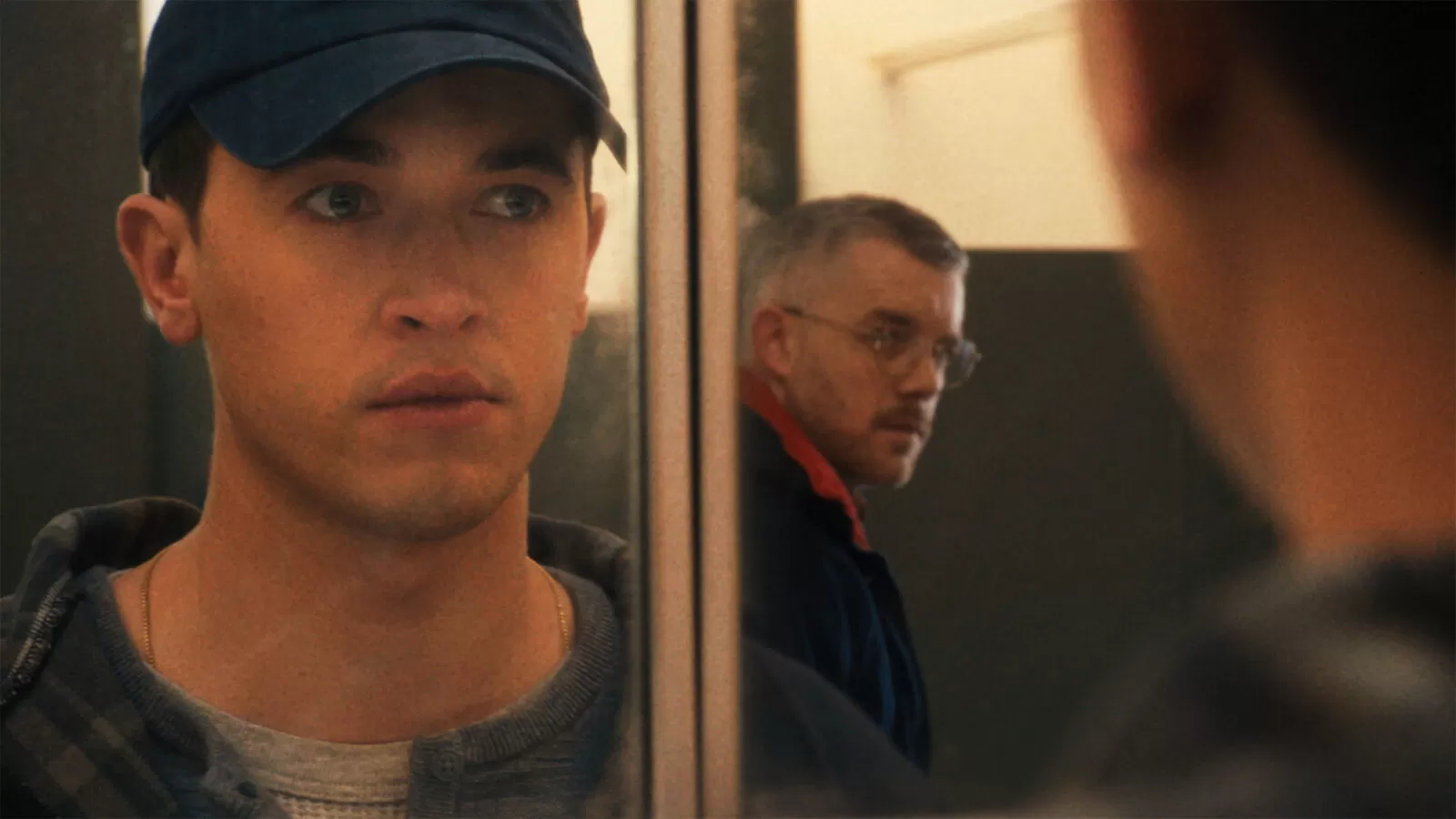
Critique of the film Plainclothes by Carmen Emmi with Russell Tovey and Tom Blyth. A sensory gay thriller that does not leave one indifferent. A striking first feature film The director Carmen Emmi hits hard for his first feature film PLAINCLOTHES (title that refers to plain clothes, when police officers do not wear their uniforms). And offers Russell Tovey his best role in a cinema film. Courtesy of Sundance Institute | photo by Ethan Palmer A gay policeman in the closet in the 1990s The plot takes place in the late 1990s in the United States (in Syracuse) and follows the character of Lucas (Tom Blyth, excellent), a young cop who evolves in a male-dominated environment. Recruits are pushed to toughen up, build muscle, and toxic masculinity is clearly established as the norm. Certain cops are also pushed above all to conduct operations in shopping malls where it is about trapping homosexuals meeting in toilets to have fun discreetly. Police officers are thus tasked with seducing gays in the toilets and once their prey begins to initiate a beginning of an encounter, they arrest them. Lucas, because of his youth and charm, is chosen as bait. His colleagues do not know that for a good while, the young man has been repressing his homosexuality… The encounter with Andrew Until now, Lucas has always reluctantly accepted to engage in this sordid racket, things are about to change when he finds himself wanting to trap Andrew (Russell Tovey), a very charming daddy with glasses. Unlike the other men he had faced in…
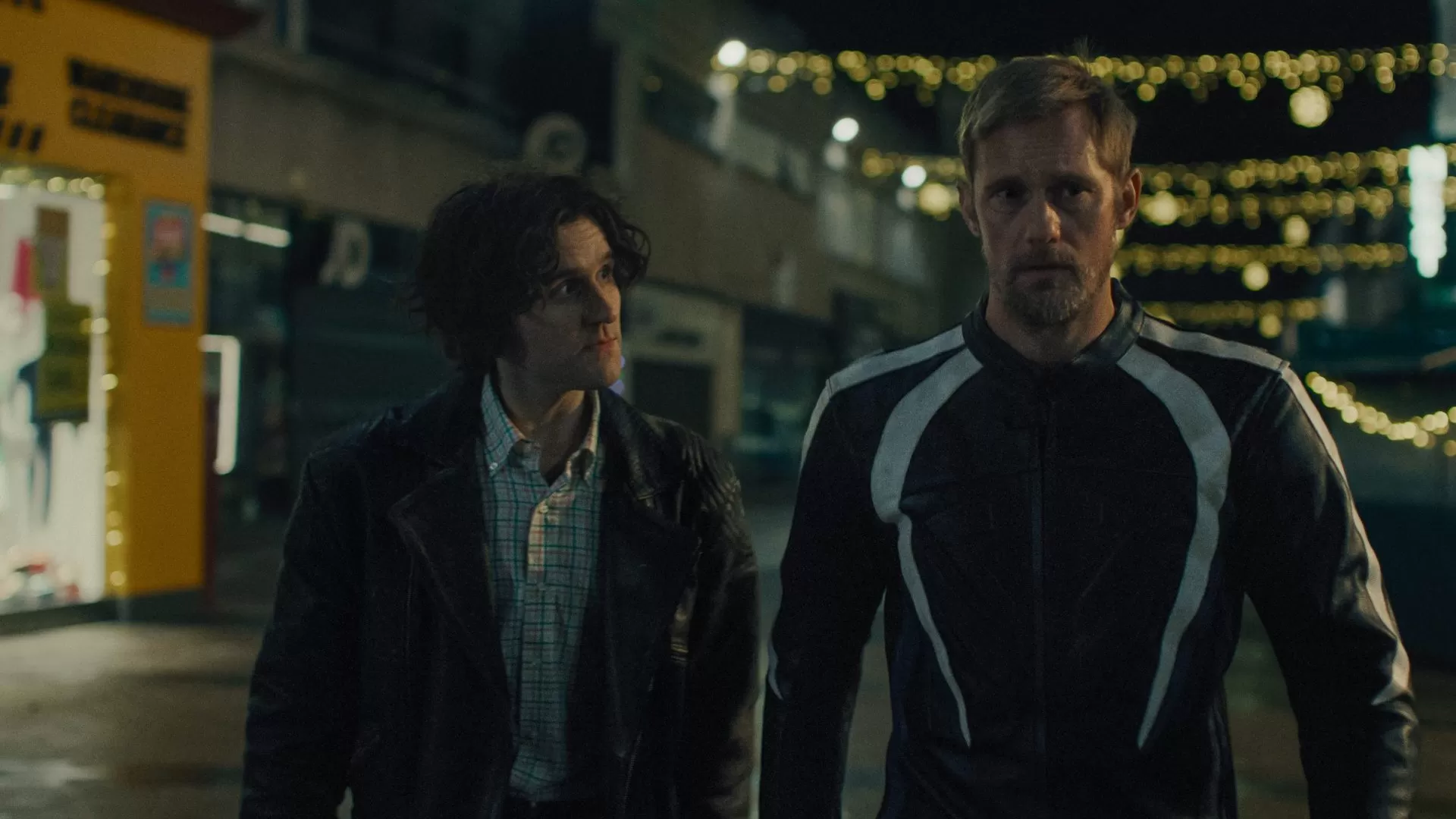
Review of the film Pillion by Harry Lighton – a sentimental education with a drop-dead gorgeous gay Alexander Skarsgård For his first feature film, director Harry Lighton makes a strong impact with Pillion. The pitch is undeniably very appealing for any gay since it promises the meeting of a shy young man who will experience his first great romance with a man, a biker gang leader and dominator, who will initiate him into submission. And it is Alexander Skarsgård who plays the dom! A singular duo: Colin and Ray The shy boy is Colin (Harry Melling). He is actually a little more than shy. He seems completely in his own world, a bit autistic, lost, not very socially comfortable. He is like an old bachelor before his time and plays in a somewhat folkloric music group with a little costume. He still lives with his parents, doesn’t have many friends and has a limited social life… and one can guess that he has little or no experience with men. What a surprise when he senses an opening with Ray (Alexander Skarsgård), a magnificent and ultra-charismatic man. But Ray is not like the others. He is an ultra macho dominator who is only looking for a submissive. For him the mind is more important than physical beauty. And he sees in Colin a potential for docility. An iconic role for Alexander Skarsgård What an iconic role for Alexander Skarsgård who has never been so beautiful on screen. He and the director go all in and the magnificent blond actor looks like…
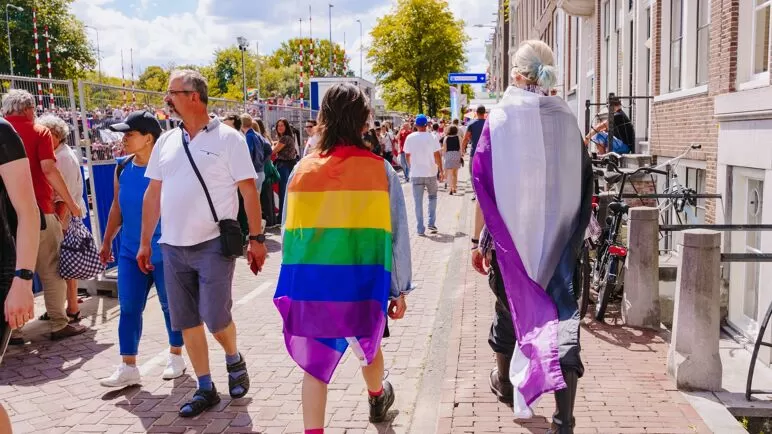
In 2025, something remarkable happened in a tiny town of just 7,000 souls resting along the rugged West Coast — it finally hosted its very first Pride celebration. You might think, in a year when so many parts of American life seemed to be taking a step backward on LGBTQ+ acceptance, how could this little place still be moving forward? Yet, progress doesn’t always follow a straight line, and this town’s story shows exactly why hope can take root even in the most unexpected soil. Kay, who grew up there, shared a deeply personal reflection with me, and honestly, their words struck a chord I can’t shake. This town had once been a fort, a hub for logging and fishing — industries soaked in raw, rugged masculinity and the heavy weight of colonial and patriarchal history. It wasn’t exactly a place humming with acceptance or gentle understanding. The air was thick with old, rigid ideas about who people should be — ideas that left no room for anyone who didn’t fit the narrow mold of “male” or “female,” “straight,” or “normal.” Growing up, Kay rarely heard the word “gay,” let alone anything about the vast, colorful spectrum of human identity. Imagine being a kid trapped in a body that felt like a stranger — your own skin revolting against you, your identity invisible and misunderstood. Kay told me about feeling disgusted by their body, struggling with the simple act of dressing or bathing without feeling out of place or ashamed. School wasn’t a refuge; it was a battleground where classmates…

When "Pit Babe: Season 2" rolled onto my screen, I was hoping for a thrilling ride, especially after hearing all the buzz about its slick visuals and high-octane race sequences. But honestly? It felt like stepping into a tangled web where every thread was fighting for attention—and not in a good way. The storyline tangled itself up in so many characters and side plots that I found myself drifting off more than once, desperate for something to grip me. It’s like they threw all their ideas into the mix but forgot to blend them into a captivating stew. Babe and Charlie’s relationship, supposed to be the heartbeat of the show, often felt like a bumpy rollercoaster stuck on a slow climb. Their on-again, off-again vibe made me squirm—especially with that new guy Willy lurking in the shadows, stirring up jealousy and tension. Why couldn’t Babe just have had an honest chat with Charlie? A little communication might have saved us from hours of eye-rolling misunderstandings. Meanwhile, Charlie’s obsession with concocting a serum to “normalize” superhuman abilities feels like a subplot stretched too thin, especially when you throw in Way’s twin-lookalike drama and Tony—yeah, that relentless villain who cheats death like it’s a casual game of hopscotch. Honestly, how many second chances does one bad guy get? The pacing? Oh, it’s a slow burn that too often borders on a snooze fest. By the middle episodes, my finger was itching to hit fast forward so many times I lost count. I get that the producers spared no expense—each race scene is…
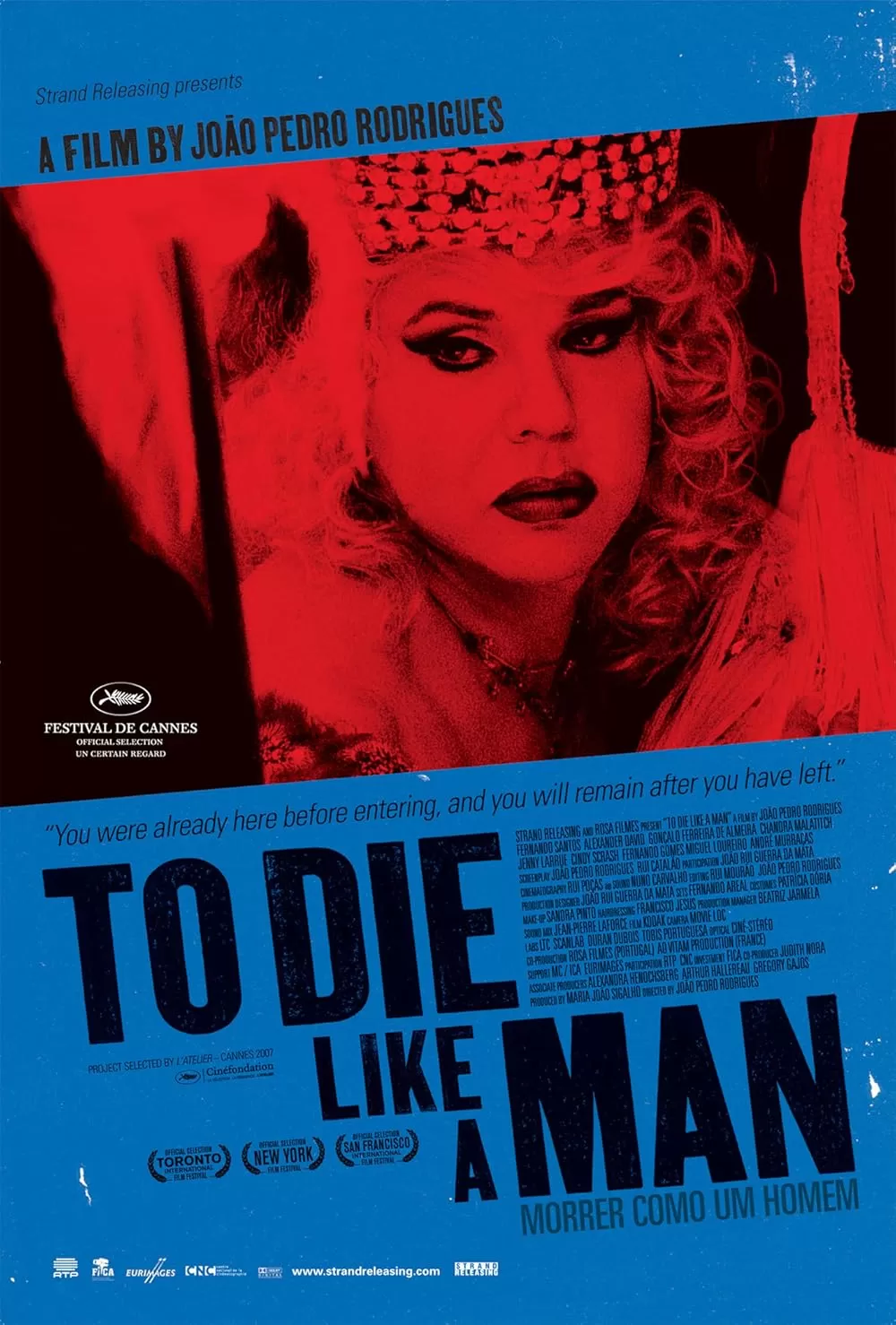
To Die Like a Man (Morrer Como Um Homem) Review: Exploring Identity, Love, and Struggle in an Emotionally Haunting LGBTQ+ Drama
There’s something haunting about Morrer Como Um Homem (To Die Like a Man), a film that dives into the turbulent life of Tonia, an aging drag queen wrestling with love, identity, and the creeping shadow of mortality. At its core, the movie promises a poignant exploration of selfhood and desire, but somehow, it gets caught in its own tangled web, leaving me with mixed feelings swirling in my mind. From the moment it opens in grim darkness—two soldiers caught in a violently intimate encounter that abruptly leads us to a strange, quiet house inhabited by trans women—you’re nudged into a world that feels both raw and surreal. Yet, as the storyline tumbles forward, the initial spark kindles into something slower, muddier. Tonia’s infatuation with Rosario, a younger man whose flaws are as glaring as his charm—that toxic cocktail of affection and abuse—should have been heart-wrenching. Of course, it almost is, but the relentless back-and-forth between them begins to feel more exhausting than emotional. I kept wondering, Why does Tonia sink so deep into this damaging love? It’s a bit like watching a beautiful flower desperately grow through cracked concrete—defiant but fragile. Eventually, you stop asking for neat explanations and start accepting that their connection must run deeper than surface wounds. Then there’s Tonia’s son—the wandering ghost in the story—whose sporadic appearances add a confusing echo rather than clarity. Same guy from that violent opening scene, yet the film never quite ties the threads together, leaving me puzzled about his role. Honestly, those moments felt like whispers carried off by the…
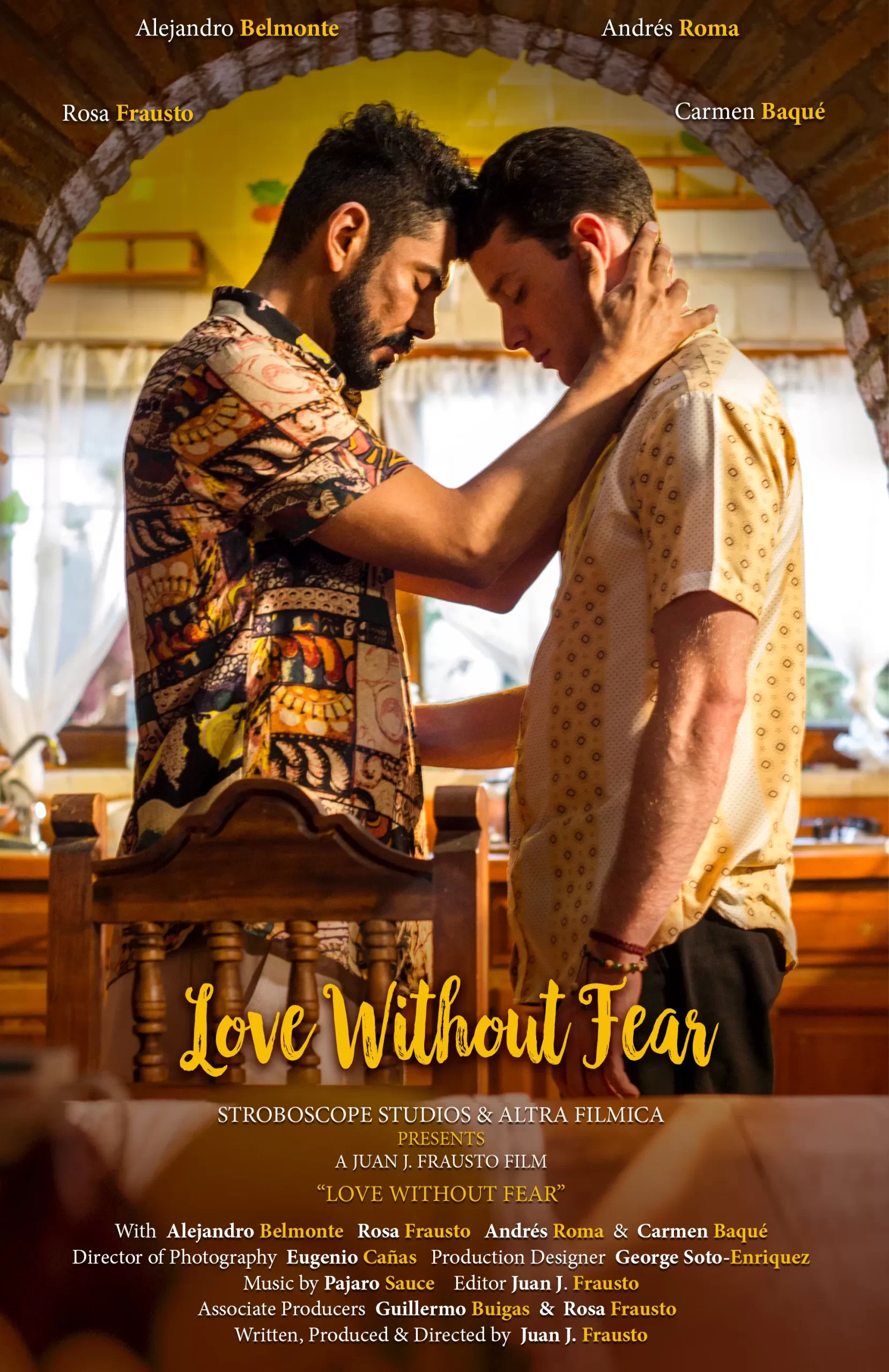
Amar Sin Miedo (Love Without Fear) Movie Review: Exploring Love and Identity in Scenic Taxco, Mexico
“Amar Sin Miedo (Love Without Fear)” paints its story against the sun-dappled, cobblestone charm of Taxco, Mexico—a city so captivating that it practically steals the spotlight. I have to say, from the moment the camera lingers on its vibrant streets and rustic rooftops, I was hooked by the setting alone, instantly adding Taxco to my dream travel list. But as for the story itself? Well, it left me tangled in a web of mixed emotions. At its heart, “Amar Sin Miedo” tries to whisper a message about embracing life’s fluidity—letting your heart wander, stay open, and savor new experiences without hesitation. That invitation felt genuine, like a gentle breeze urging one to break free from rigid expectations. Yet, the film’s execution left me scratching my head more than once. The way these two men connect feels oddly stitched together rather than unfolding naturally. There’s this unusual abruptness in Leo’s sudden advances—where moments before, affection or attraction seems invisible. It’s as if the film flashes a neon sign that says, “Hey, something’s happening here!” but forgets to show us the sparks that should’ve lit the fire. Josh, an American photographer visiting with his Mexican girlfriend, embarks on what begins as a romantic exploration filled with nostalgic recollections of her childhood. On their first night, a heated argument fractures their harmony, counterpointed sharply by a tender public proposal he witnesses in the square—a poetic contrast that immediately hooked me. But when the girlfriend falls ill and Josh wanders alone, chance throws Leo into his path—the very man from that proposal scene. Together,…
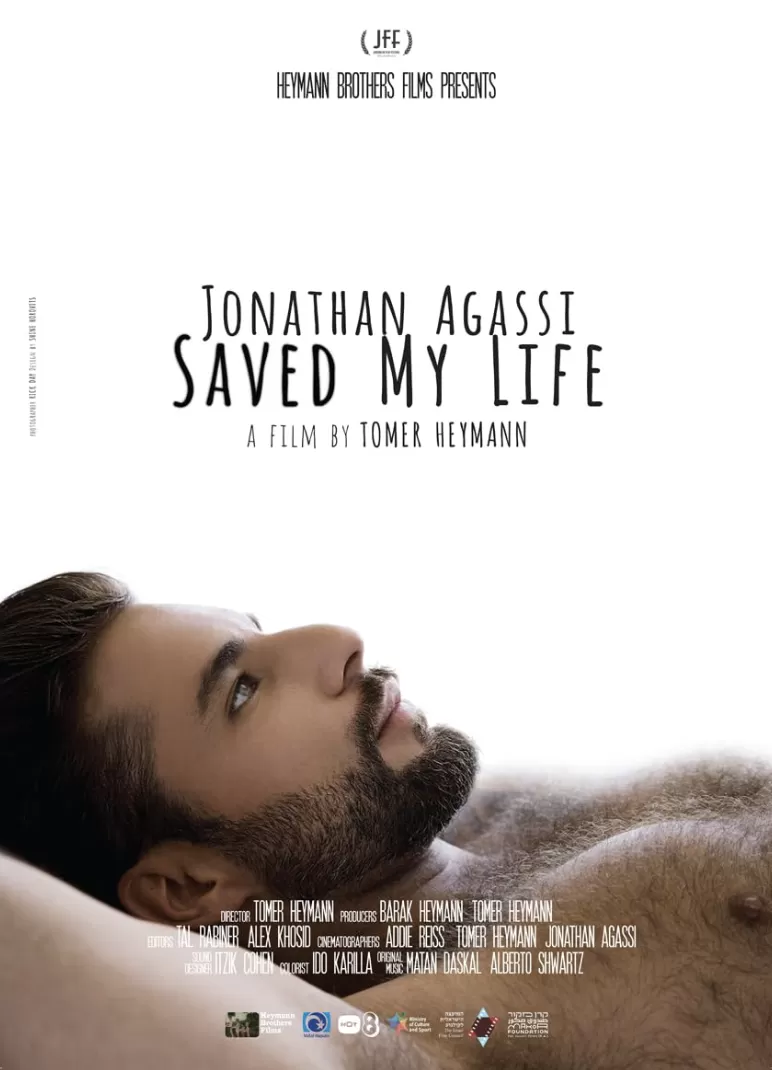
Jonathan Agassi Saved My Life Documentary Review: Inside the Life, Struggles, and Redemption of a Gay Porn Star (Israel/Germany)
There’s something almost hypnotic about Jonathan Agassi Saved My Life, a documentary that dives headfirst into the turbulent, glittering world of one of gay pornography’s brightest — yet most fractured — stars. I found myself drawn into Jonathan’s story, not just because of the flash and fame, but due to the raw humanity pulsing beneath it all. This is a man caught between two worlds: the dazzling, taboo realm of adult entertainment and the aching loneliness of personal identity. Jonathan Agassi, splitting his life between the energetic streets of Berlin and the sun-soaked corners of Tel Aviv, built a name in an industry many still whisper about but few understand. And yet, beyond the glitz and the muscle, beyond the neon lights and endless cameras, this film reveals someone grappling with profound pain — a man chasing fantasies that don’t fully belong to him, all while wrestling with the ghosts of a fractured family past. Watching him interact with his mother, the one constant in his life after his father walked away during his childhood, adds a deeply moving layer to the narrative. Their bond isn’t just familial; it’s a lifeline, a fragile thread holding Jonathan’s world together amid chaos. The documentary, lovingly crafted over eight years, unfolds like a slow burn. Not just a peek, but a plunge into the highs of his career and the crushing lows of his battles with depression and addiction. At times, it’s brutally honest — especially in scenes where Jonathan’s body convulses in the throes of withdrawal, his cries reverberating painfully through his…
