
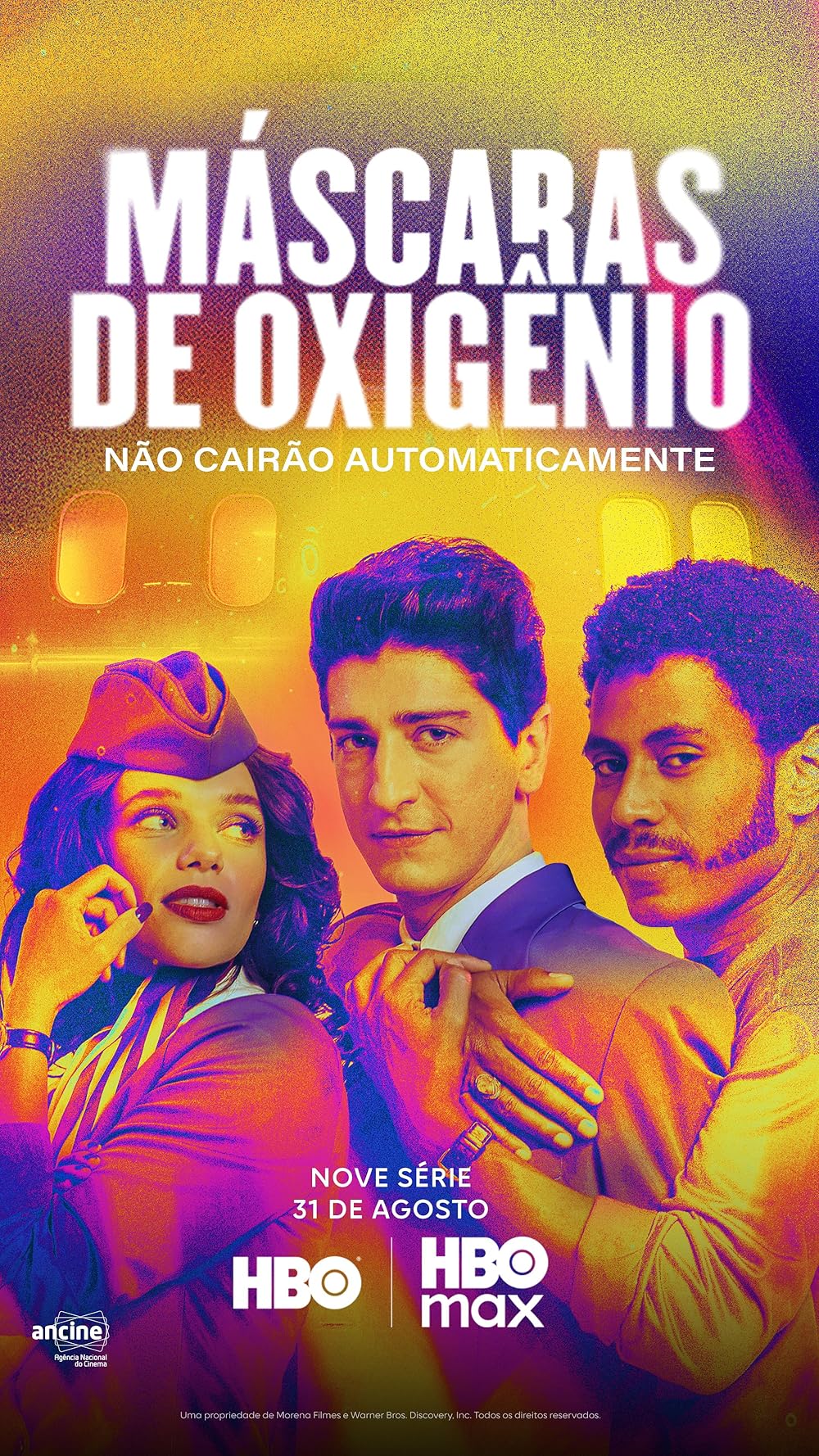
Oxygen Masks Will Not Drop Automatically is the kind of series that feels larger than a simple review summary can contain. Set in Rio de Janeiro during the late 1980s, it uses the AIDS crisis not as distant background but as the force shaping every friendship, romance, fear, and act of rebellion on screen. What makes it hit so hard is that it never forgets the political violence of indifference, yet it still leaves room for tenderness, nightlife, humor, and the stubborn energy of people trying to keep one another alive.
The miniseries follows Nando, Lea, and Raul as their lives intersect with a growing public health catastrophe and a society still ruled by stigma, silence, and institutional neglect. Nando begins as a charismatic flight attendant enjoying work, love, and nightlife, but the spread of HIV changes everything around him. As friends get sick and official systems fail, the story widens into a risky smuggling effort to bring vital medication into Brazil, turning private grief into collective resistance.
What works best here is the show’s ability to balance scale and intimacy. It has the sweep of a historical drama, but its emotional force comes from the ordinary details of care: friends protecting each other, lovers staying close through fear, families struggling to understand what is happening, and queer communities building support where institutions offer almost none. The writing makes activism feel lived rather than slogan-heavy, which gives the political material real weight.
The period setting is also impressively vivid. The clubs, uniforms, apartments, and street-level atmosphere help the series feel grounded in a specific time rather than dressed-up nostalgia. Just as important, the Brazilian perspective gives the material a texture that feels distinct from more familiar Anglophone AIDS dramas. Instead of repeating history in generic terms, the series shows how this crisis unfolded inside a local culture, with its own forms of joy, denial, pressure, and resistance.
Performance is another major strength. Nando carries the emotional center with a mix of charm, vulnerability, and quiet devastation, while Lea emerges as far more than a side character or symbolic ally. Raul, meanwhile, gives the series some of its strongest political and romantic tension, growing into a figure whose activism never feels detached from desire or grief. The ensemble overall makes the suffering believable without reducing the characters to victims alone.
If there is a challenge, it is that the series demands emotional stamina. The material is dense, painful, and often overwhelming by design, and the five-hour runtime gives the story room to linger in heartbreak. Some viewers may find it difficult to watch in one stretch, not because it loses control, but because it refuses to treat this history lightly. That heaviness is part of the achievement, even if it makes the experience less easy than more conventionally inspirational prestige drama.
In the end, Oxygen Masks Will Not Drop Automatically succeeds as a powerful queer historical drama about solidarity under pressure. It is informative, moving, and politically sharp without sacrificing human warmth. More than anything, it understands that survival in a hostile era was never only medical or personal. It was communal.
Rating: 8/10


