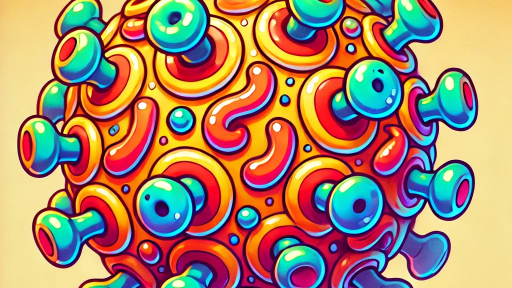
Briggs and researchers at the Max Planck Institute for Biochemistry have discovered the mechanism behind a crucial step in the HIV life cycle. In collaboration with teams from Heidelberg University and Yale University, they revealed that the mysterious "spacer peptide 2" (one of the HIV viral components) plays a key role in transforming immature HIV-1 particles into infectious particles. The research results have been published in the journal Nature. Key processes in HIV maturation HIV needs to undergo a maturation process to become infectious, which involves rearrangements in the structure of the matrix protein (red). In immature virus particles, the matrix protein forms a loose lattice structure (top right), while in mature HIV, the binding of spacer peptide 2 triggers the formation of a new, more stable lattice structure (blue, bottom right). © Illustration: Margot Riggi, MPI of Biochemistry. HIV-1 particle maturation HIV-1 particles are initially released from infected cells in an immature, non-infectious form. The main building block of the virus particle is about 2,000 copies of a long rod-shaped protein called Gag. To be able to infect host cells, HIV must go through a maturation process that involves the cleavage of Gag by HIV-1 protease (a viral enzyme), breaking it down into six smaller proteins, including the capsid protein and the matrix protein. This cleavage process results in a huge rearrangement of the virus's internal structure. Although scientists have been exploring structural changes in the viral capsid that envelops the genome for many years, comparatively little is known about the virosome, the protein shell beneath the lipid membrane…
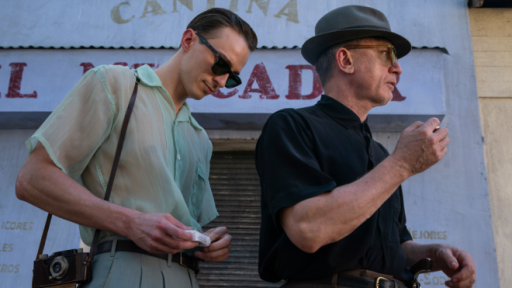
Luca Guadagnino, a renowned director behind Call Me by Your Name and Challengers, now brings us into a new romantic world in Queer, adapted from the deeply personal work of William S. Burroughs. The result? A unique, striking film that stands out in its own right. Set in 1950s Mexico, the film follows William Lee (played by Daniel Craig), a wandering writer trapped in a life of alcohol and drug abuse. His existence is marked by indulgence, with little to anchor him. When not numbing his mind to cope with life's chaos, William spends his time with his mischievous gay friend Joe (Jason Schwartzman) or in the bars where fleeting encounters with young men occur—often with a price. William, a wandering dandy, drifts through life aimlessly, moving from one binge to the next, and from bar to bar. It is during one of these hazy nights that he encounters Eugene (Drew Starkey), a strikingly handsome young man who, with his Navy background, seems almost otherworldly. Eugene’s beauty, marked by a flawless face and perfect body, draws William in, sparking an immediate obsession. As they start spending time together, William's desire grows, and he wonders if he can seduce Eugene into his bed. But Eugene remains a mystery—ambiguous, detached, sending mixed signals while spending much of his time with Mary (Andra Ursuta), a woman he enjoys playing chess with. Eventually, one night, Eugene finds himself at William’s place, and they sleep together. In that moment, William feels a rare sense of aliveness, something he hasn’t experienced in ages. However, as the…
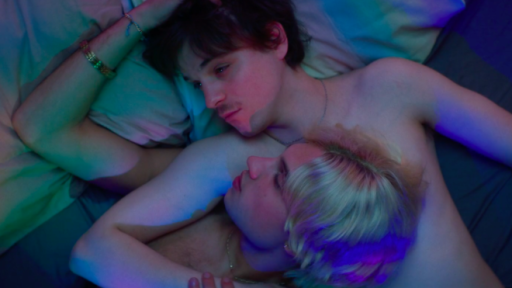
For his first short film as director, Frédéric Lavigne hits hard and right in the heart with the hyper sensitive Coeurs perdus . Paris, 1992. Julien (Guillaume Soubeyran) is a science thesis student. A bisexual who doesn't really accept himself, he logs on to a gay phone line from time to time to have anonymous encounters. It is through this channel that he meets Christophe (Isaak Dessaux), a boy his age who is a bit of his complete opposite. Julien is taciturn, discreet, speaks little, internalizes or even represses his feelings, dresses in little vintage T-shirts. Christophe, who is a hairdresser, is an assertive gay man, who may seem extravagant at first glance, extroverted, with a queer look. Opposites attract and their first meeting immediately causes sparks: Julien is clumsy and not very comfortable but Christophe with his kindness and spontaneity will quickly take the lead. In the weeks and months that follow, they will live an up-and-down relationship: while Christophe becomes attached, Julien remains elusive, inaccessible, and undemonstrative. We understand that he feels things but blocks them, does not fully assume them. And then one day he learns news that will shake him up forever... There are films that have this rare little magic that makes you know from the first scenes that you are going to love what you are going to see. Hearts lost to this magic. Everything rings true in this highly melancholic short film that is extremely promising. Obviously, the director Frédéric Lavigne was not mistaken in choosing the ultra-cute Guillaume Soubeyran in the lead role, who explodes here on the…
Zhao, a paraplegic man from Jilin, was sentenced to serve his sentence in Siping Prison on January 15, 2009 for robbery and attempted murder. He tested positive for HIV antibodies in prison in June 2011. Zhao and his family believed that the prison management had problems that led to his infection, and filed an administrative compensation lawsuit. The Compensation Committee of the Jilin Provincial High Court and the Compensation Committee of the Supreme People's Court both determined that Zhao was infected with HIV while serving his sentence in Siping Prison, and that Siping Prison had faulty supervision and should be held responsible for compensation.Zhao's family said that Zhao was released from prison in early March and they were worried about his follow-up treatment and care. The Jilin Provincial Prison Administration Bureau confirmed that Zhao would be released from prison and was carrying out resettlement work, such as applying for minimum living allowance and contacting the Disabled Persons' Federation. Zhao's family said that after Zhao tested positive for HIV in prison, they filed an administrative lawsuit against Siping Prison and demanded state compensation of about 8 million yuan.On January 24, 2019, the Compensation Committee of the Jilin Provincial High Court revoked the previous relevant compensation decision, ordered Siping Prison to pay Zhao 100,000 yuan in mental damages, and rejected other compensation requests. On October 14 of the same year, the Supreme Court Compensation Committee rejected Siping Prison's appeal and upheld the Jilin Provincial High Court's decision on state compensation for Zhao's HIV infection in Siping Prison. Zhao's family said that Zhao…
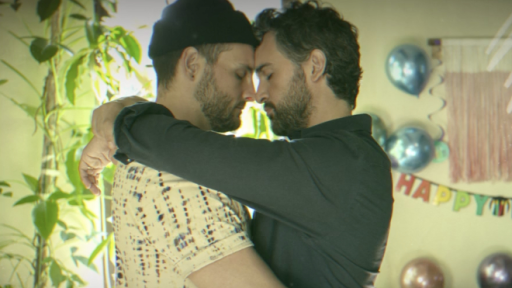
Premier long-métrage du réalisateur Andy Vallentine, A l’horizon (titre original The Mattachine Family) raconte le parcours d’un trentenaire gay confronté à sa quête de paternité. Un film touchant et sincère, aux accents de vécu personnel. Résumé de A l’horizon (The Mattachine Family) : Thomas (incarné par le séduisant Nico Tortorella), photographe trentenaire, a consacré sa vie à immortaliser ses proches à travers l’objectif. L’amour, la famille et l’amitié sont au cœur de son existence. Ses parents étant décédés, il se rapproche de ses amis les plus proches : son ancien voisin et meilleur ami gay Jamie, sa meilleure amie lesbienne Leah, mais surtout de son mari Oscar (Juan Pablo Di Pace). Ce dernier, enfant abandonné, a été placé en foyer d’accueil avant de devenir une star grâce à une série télévisée traitant de ce thème. Après avoir été exposé par la presse à scandale et avoir traversé une période de déclin professionnel, Oscar retrouve désormais un semblant de bonheur auprès de Thomas et se prépare à jouer dans une nouvelle série. Malgré leur amour fort, Thomas et Oscar traversent une phase difficile. Ils avaient accueilli un enfant abandonné pendant un an, mais après s’y être fortement attachés, la mère de l’enfant est venue le reprendre. Pendant ce moment particulièrement éprouvant pour Thomas, Oscar, en plein tournage pour sa nouvelle série, a dû s'absenter. Heureusement, le photographe peut compter sur ses amis de toujours pour le soutenir. Toutefois, cette expérience de paternité soulève en Thomas de nombreuses questions sur ce qu'il souhaite réellement dans sa vie. Peu à peu, il prend…
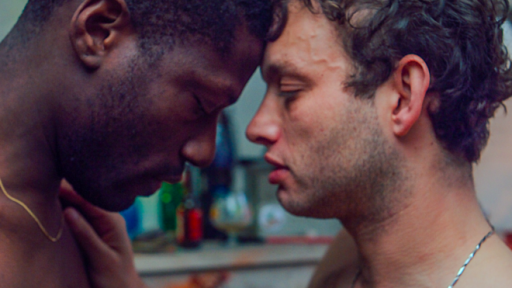
Depuis plus de dix ans, Noel Alejandro a su se faire un nom dans l'univers du cinéma, en s'imposant comme un réalisateur unique en son genre. Ses débuts, marqués par des courts-métrages parfois perçus comme du cinéma X gay d'auteur, l'ont progressivement conduit à un statut de cinéaste reconnu. Sa carrière s'est enrichie d'œuvres éclectiques et surprenantes, dans lesquelles il maintient une exigence de qualité formelle sans failles. Son dernier film, Remember I am dead, dont la version « Original cut » est disponible en ligne pour une durée avoisinant l’heure, continue de surprendre. Si la sexualité explicite reste présente, elle ne constitue plus le principal moteur du film. Même si la scène intime est centrale, elle sert davantage à illustrer la mélancolie qui domine le récit. Remember I am dead se profile ainsi comme une œuvre étrange et singulière, difficile à comparer à d'autres films, défiant toute tentative d'étiquetage simpliste. Pierre Emö, fidèle acteur et ami du réalisateur, incarne Sagat, un trentenaire solitaire vivant dans une vaste maison isolée en pleine campagne. Ce lieu, autrefois animé, est désormais délaissé, et la solitude de Sagat semble profondément le ronger. Sa seule compagnie est celle d'Albert, interprété par Kody McCree, un jeune homme séduisant qui l’assiste dans ses tâches agricoles. Dès les premières scènes, une atmosphère étrange et silencieuse s'installe, sans musique, immergeant le spectateur dans l'univers d'une campagne coupée du monde. Mais l'événement qui survient ensuite est des plus inattendus : Sagat se rend au cimetière local et déterre un cadavre qu'il ramène chez lui. Ce corps appartient à Roman,…
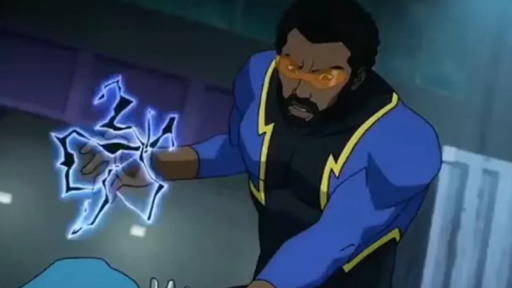
Jenny Blake Isabella, the creator of DC Comics' Black Lightning, has publicly come out as transgender. She shared this news in a blog post on her personal website, where she also addressed questions from fans. While she prefers to be called Jenny, Isabella clarified that she doesn’t view her previous name, Tony Isabella, as a deadname. She plans to continue writing under both names and will present herself as Tony Isabella for most events throughout the year. Isabella is recognized for creating the character Black Lightning and the comic series itself in 1977, in collaboration with artist Trevor Von Eeden. Black Lightning holds the distinction of being DC's first African American superhero to lead his own series and is often regarded as one of the first mainstream African American superheroes. On February 9, Isabella shared an image on X stating, “Keep calm and yes I’m transgender,” along with a message affirming the authenticity of her announcement and requesting privacy for her and her family. Shortly thereafter, she revealed her preferred name on Facebook and discussed how she would use her former name. She also posted a picture of a Christmas ornament crafted by a friend following her name change. Additionally, Isabella mentioned attending her first hair appointment at the Green Opal Salon. The 73-year-old expressed on X that coming out “was one of the scariest things I have ever done,” but she has felt grateful for the love and support from her fanbase. On February 11, Isabella published a blog post on her website where she answered fan questions, detailing…

According to the Prison Policy Initiative, LGBTQ+ individuals face arrest rates more than double those of their straight counterparts, with lesbian and bisexual women being over four times more likely to be arrested than straight women. Additionally, one in six transgender people have experienced incarceration at some point in their lives. Tony Vick is currently serving a double life sentence for murder at the South Central Correctional Facility in Clifton, Tennessee, where he has spent nearly three decades. Throughout his time in prison, he has taken on various roles, including tutor, clerk, and newspaper editor. He has also led book clubs and co-authored two books: Secrets from a Prison Cell: A Convict’s Eyewitness Accounts of the Dehumanizing Drama of Life Behind Bars (2018) and Locked In and Locked Out: Tweets and Stories on Prison and the Effects of Confinement (2023). In a recent essay for Filter Magazine, Vick, who grew up in a strict Southern Baptist household and was deeply closeted, reflects on being openly gay in prison and the changes he has witnessed over the years. “The experience of being gay in prison has changed a lot since I was first incarcerated almost 30 years ago,” he notes. He recalls that very few prisoners were open about their sexuality back then, and those who were often faced severe consequences, sometimes ending up in "administrative protective custody," which is a euphemism for solitary confinement. It's estimated that 85% of LGBTQ+ individuals in U.S. prisons have been placed in solitary at some point, typically under the pretense of protection, despite numerous…
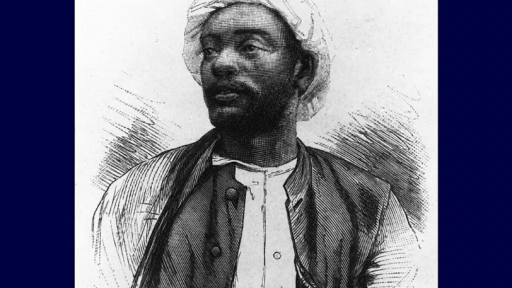
The last independent ruler, or kabaka, of the Buganda kingdom—now part of Uganda—was King Mwanga II, who has been a central figure in a propaganda battle since his reign began in 1884. Known for his relationships with both male and female lovers, critics have labeled him a deranged, murderous deviant, while supporters portray him as an early anti-colonial fighter. Modern LGBTQ+ activists have also pointed to him as evidence that queerness is part of Africa's historical narrative. Mwanga ascended to the throne at just 18, succeeding his father, Muteesa I. Reports suggest he had 16 wives and numerous male lovers, permitting homosexual relationships among his court. His lovers, regardless of gender, were referred to as bakopi, meaning "wives," while he was called their nnanynimu or omufumbo, translating to "husband," as noted by Rahul Rao in the Journal of Eastern African Studies. Muteesa believed that forming an alliance with the British and welcoming missionaries would protect Buganda from colonial encroachment, trading influence for military support. He converted to Islam to strengthen ties with Swahili and Arab traders while allowing Protestant and Catholic missionaries into Buganda, reasoning that their rivalry would keep them preoccupied and unable to challenge his authority. However, Mwanga was skeptical of his father's strategy. As Destiny Rogers pointed out in QNews, he recognized that permitting missionaries into an African kingdom often led to increasing European influence, ultimately resulting in a loss of autonomy. Early in his reign, Mwanga began executing missionaries, killing 45 Christians between 1885 and 1887, many of whom were pages in his court who had…
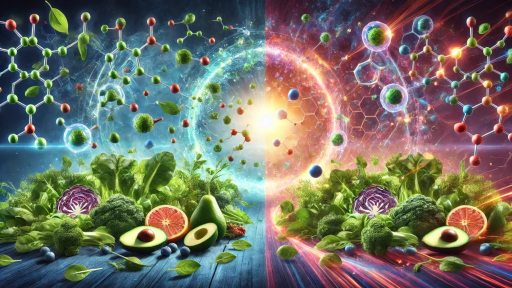
Science is making significant strides in cancer research, particularly through studies related to HIV/AIDS, which have historically received funding from U.S. grants. However, recent decisions by Trump to suspend this funding pose challenges. Despite this setback, promising discoveries continue to emerge weekly, including a recent breakthrough that suggests a precursor to vitamin K could serve as an effective and affordable treatment option. What is Vitamin K? Vitamin K is a vital nutrient essential for various biological functions. Most notably, it plays a crucial role in blood clotting, helping to prevent excessive bleeding by activating specific proteins involved in this process. Additionally, it supports bone health by facilitating calcium fixation, thereby lowering the risk of osteoporosis and fractures. Beyond these functions, vitamin K is also involved in cell regulation and may provide protective benefits against certain chronic diseases, including cancer. This nutrient is found in a variety of plant and animal foods and is primarily synthesized by intestinal bacteria, making it readily available to the body. However, some individuals may experience deficiencies, particularly those with digestive disorders that hinder absorption. What is the Difference Between Vitamin K and Its Precursor? The primary distinction between vitamin K and its precursor lies in their chemical structures and how they are activated in the body. Vitamin K is the biologically active form that the body uses directly, while its precursor is a molecule that must undergo transformation to become functional. Vitamin K precursors, such as menaquinone-4 (MK-4), are derived from the conversion of other forms of vitamin K or certain synthetic compounds. They require…
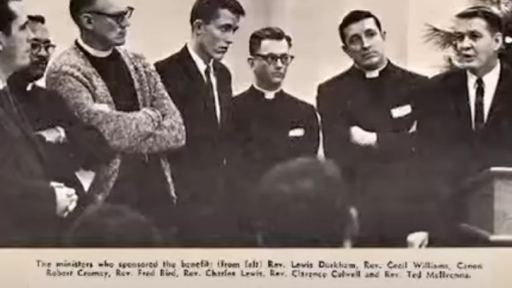
New Year’s is a time for celebration, but it also serves as a moment for significant transformation. On January 1, 1965, the queer community hosted a party that would profoundly alter perceptions of gays and lesbians worldwide. Interestingly, this event was supported by some unexpected allies: straight ministers. Jallen Rix’s 2013 documentary, Lewd and Lascivious: 1965: Drag Queens, Ministers and the SFPD, recounts how a group of cross-denominational heterosexual ministers moved to San Francisco to better understand how to serve the community. With declining church attendance among younger generations—much like today—the ministers ventured into the gay community to identify areas where they could offer support. They visited numerous gay bars to learn about the community's needs. The primary concern? Ongoing police harassment from the San Francisco PD. One bar, The Chuckkers, even put up a sign proclaiming it was “Famous for its unusual entertainment, now presents Police Harassment! Every Friday and Saturday!” Reverend Ted McIlvenna shared a harrowing account of police brutality with Rix. He recounted a night when he received a call about two gay men who had been brutally assaulted. When he suggested calling the police, they replied, “We can’t call the police because it’s the police that did the kicking.” After taking them to the hospital, they were turned away, with a doctor dismissively labeling them as “dirty, filthy queers.” McIlvenna, affiliated with Glide Memorial Methodist Church, collaborated with many in the queer community, including Phyllis Lyon and Del Martin, founders of the Daughters of Bilitis. Following a successful summit between clergy and queer leaders, a new…
